
Many food and supplement brands want to create products that do more than just fill the stomach. Consumers today demand foods and beverages that support digestive comfort, metabolic balance, and overall wellness. Yet, most processed foods are low in fiber, leading to sluggish digestion, blood sugar spikes, and low satiety after eating. This leaves formulators searching for ingredients that deliver both functional benefits and easy integration into everyday products.
Resistant dextrin is a versatile soluble fiber that offers exactly this kind of solution. It supports gut health, helps moderate blood sugar response, and blends smoothly into a wide range of food and beverage applications. What sets it apart is its subtle performance — it enhances nutrition quietly in the background, without affecting flavor or texture. Understanding this “gut-friendly secret” helps brands meet both consumer expectations and formulation goals.
In this article, U will learn what resistant dextrin is, how it affects the digestive system, the science behind its benefits, and where it can be used in food and drink products. This clarity will help you leverage resistant dextrin in your product development effectively.
Resistant dextrin is a soluble dietary fiber derived from enzymatically treated starch that resists digestion in the small intestine. It functions as a prebiotic, feeding beneficial gut bacteria and helping produce short-chain fatty acids that support digestive balance. Resistant dextrin also helps manage blood glucose levels, improves metabolic responses, and can enhance the fiber content of food and beverage products without changing taste or texture. :contentReference[oaicite:0]{index=0}
To understand why resistant dextrin is rapidly gaining traction in gut health and functional foods, it helps to start with the basics — what it is, how it works, and how it supports both consumer wellness and food developers’ needs.
What Is Resistant Dextrin and How Is It Made?
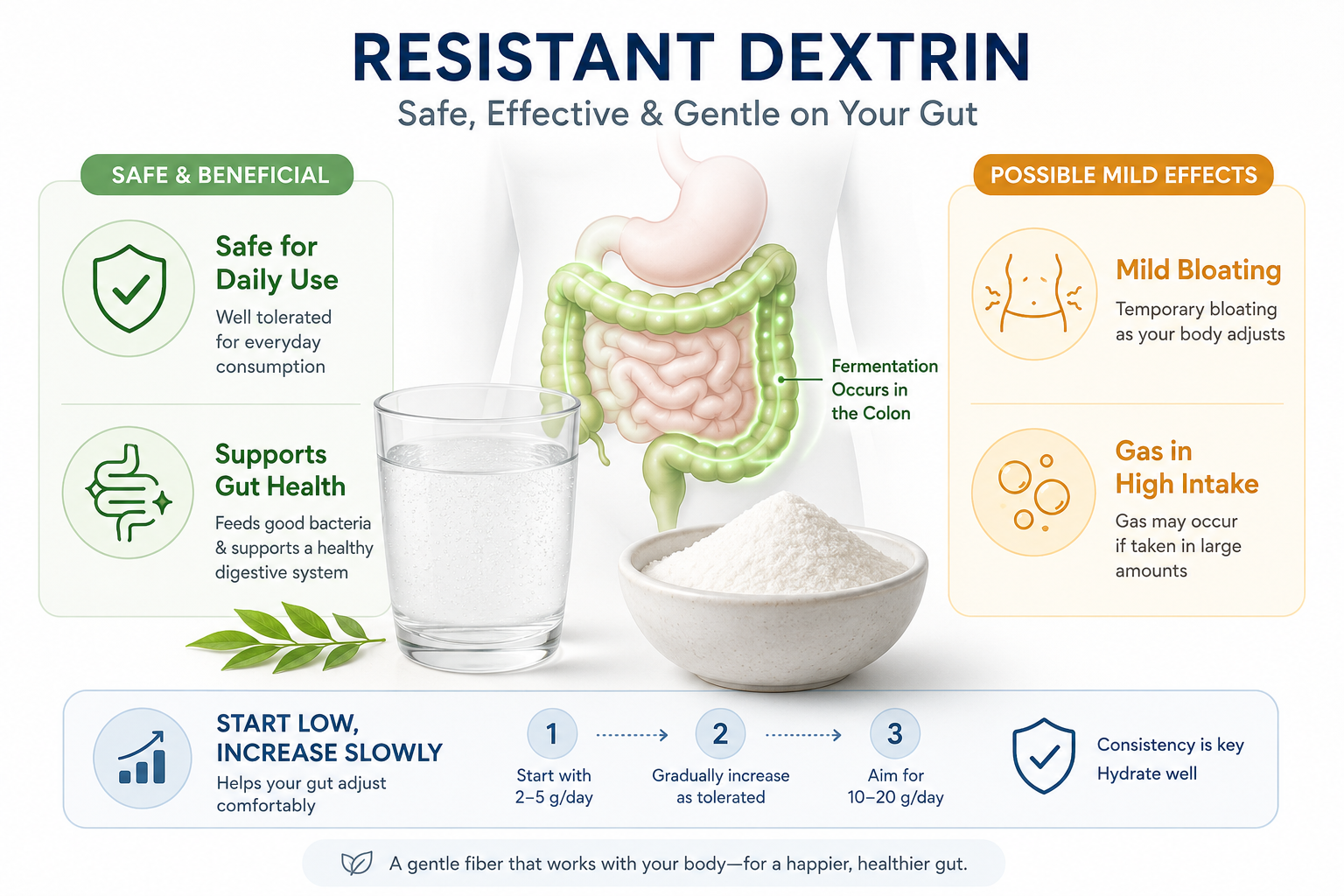
Resistant dextrin is a type of soluble dietary fiber that starts as starch — often derived from corn, wheat, or tapioca — and is transformed through controlled enzymatic or hydrolysis processes. This modification creates a fiber that resists digestion in the small intestine and continues into the colon, where beneficial microbes ferment it.
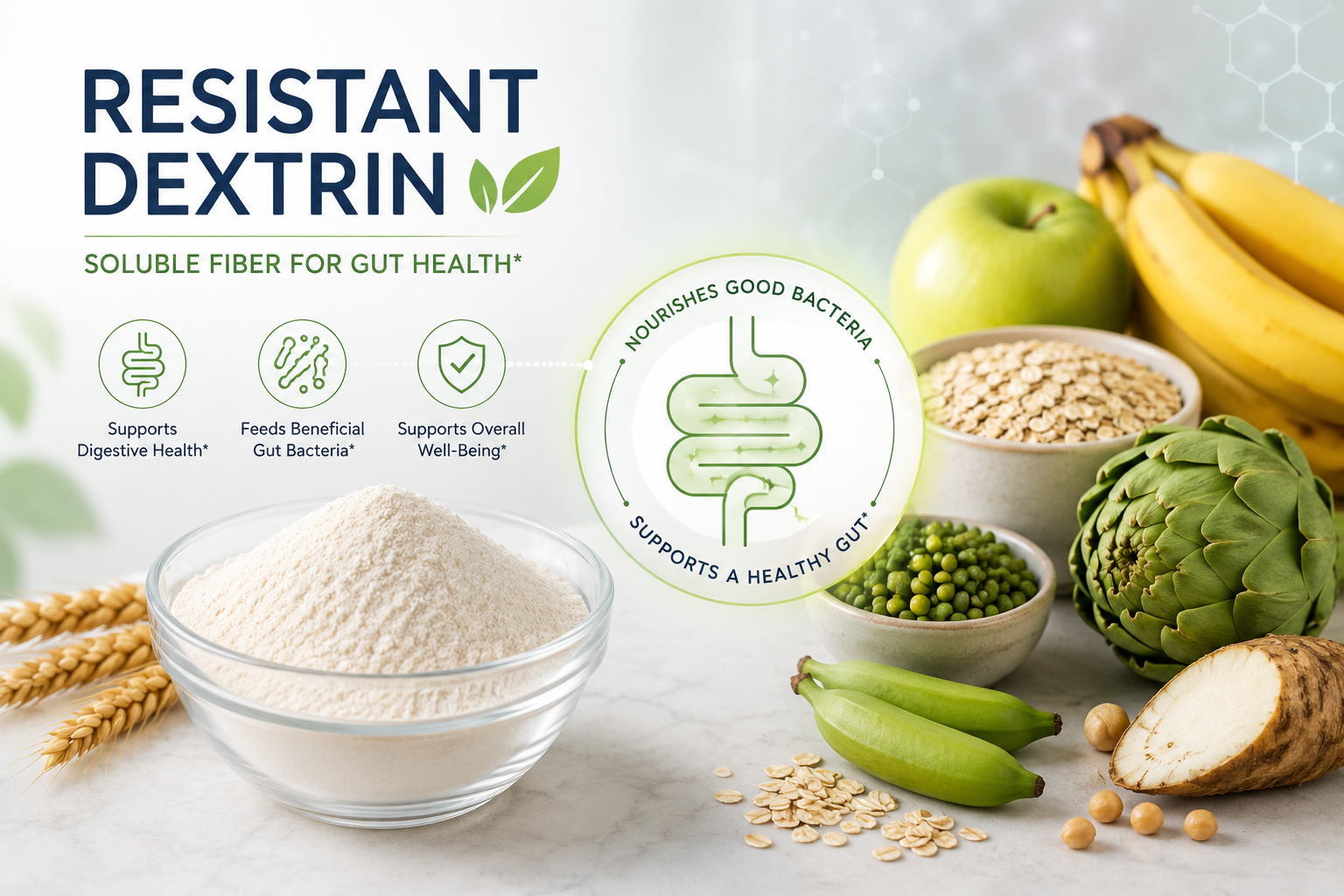
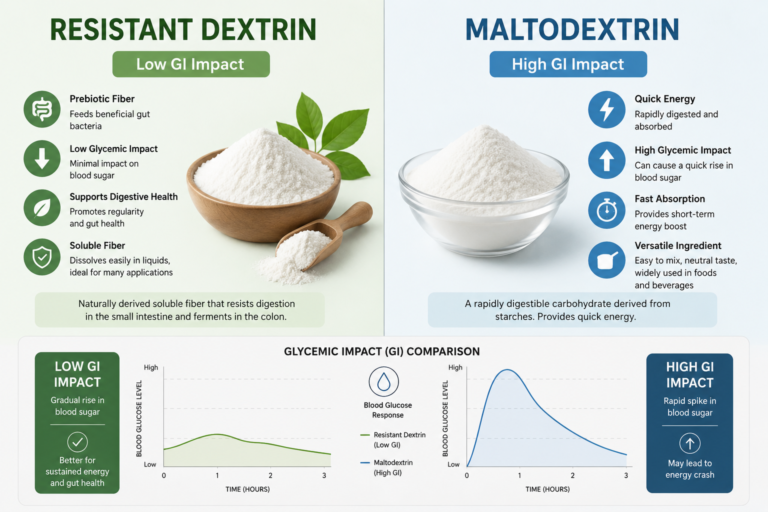
Resistant dextrin is a soluble fiber made from treated starch that reaches the colon intact, acting as a prebiotic.
Unlike typical carbohydrates that break down into glucose and get absorbed quickly, resistant dextrin’s structure makes it indigestible in the upper gut. This property is central to its functional role because it travels to the large intestine where it becomes a food source for gut bacteria. There, microbes produce short-chain fatty acids (SCFAs) such as butyrate, which are known to nourish colon cells and support gut lining integrity.
- Resistant dextrin is created through controlled enzymatic treatment of starch.
- Its structure allows it to function as a prebiotic fiber.
How Resistant Dextrin Supports Digestive Health
Good digestive health begins with a balanced microbiome. Beneficial bacteria like Bifidobacterium and Lactobacillus help maintain smooth bowel movements, reduce bloating, and support nutrient absorption. Resistant dextrin feeds these microbes, helping improve overall gut balance and comfort.
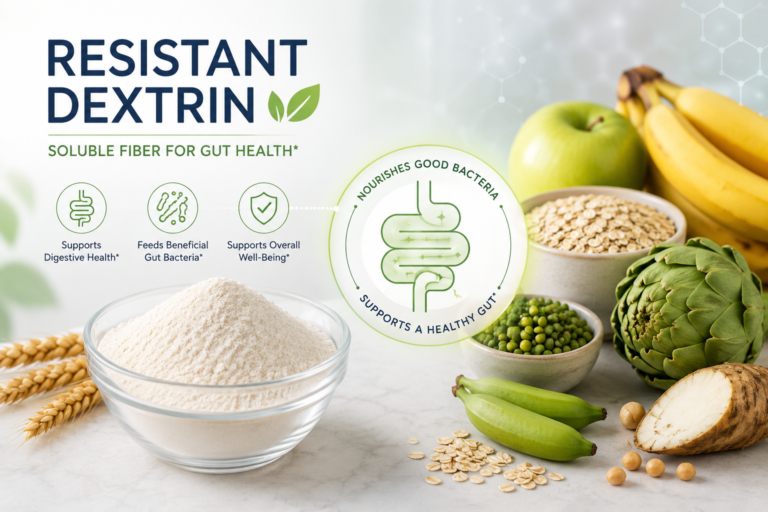
Resistant dextrin acts as a prebiotic, nourishing beneficial gut bacteria and supporting digestive health.
During fermentation in the colon, resistant dextrin stimulates growth of good bacteria, which enhances the production of SCFAs like butyrate. These fatty acids play a key role in digestive health by fueling colon cells and helping maintain a balanced microbiome environment. Clinical studies reveal that prebiotic fibers can increase beneficial bacterial populations while reducing pathogenic strains, leading to smoother bowel transit and reduced digestive discomfort.
- Resistant dextrin enriches gut microbiota.
- It supports smoother bowel movements and digestive comfort.
Why It Helps Maintain Balanced Blood Sugar
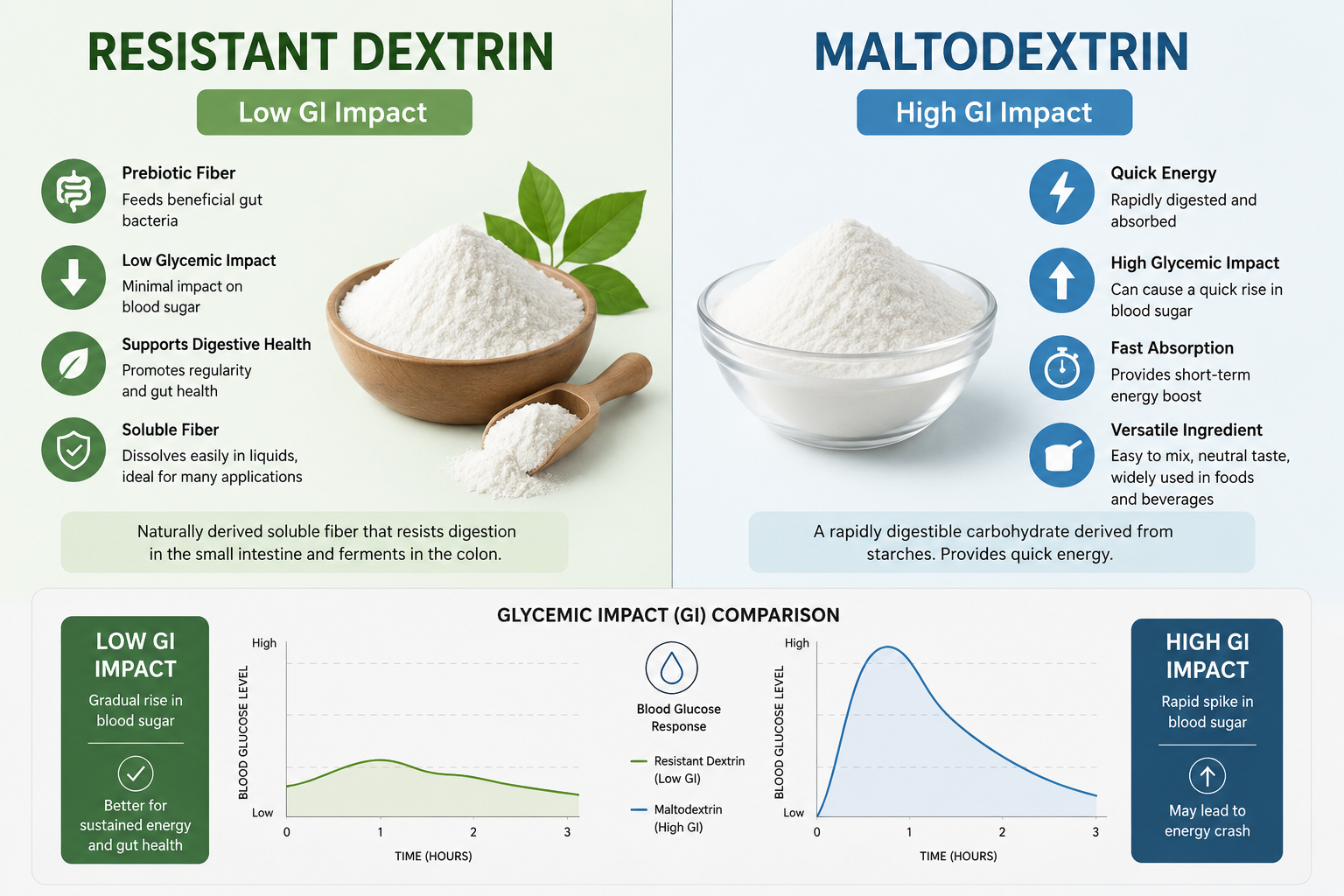
Resistant dextrin’s resistance to digestion also influences how the body absorbs glucose. Instead of rapid breakdown, resistant dextrin slows the carbohydrate absorption process, contributing to a gentler glycemic response after meals.
Because it slows carbohydrate absorption, resistant dextrin supports a lower post-meal blood sugar spike, making it suitable for low-glycemic formulations.
This slower absorption helps keep blood glucose levels steadier, which is important for metabolic balance and energy stability. Products formulated with resistant dextrin can therefore be positioned toward blood sugar management, low-GI, or diabetic-friendly markets. As interest in metabolic wellness grows, ingredients that help modulate glycemic response are valuable tools for product differentiation. :contentReference[oaicite:9]{index=9}
- Resistant dextrin contributes to a lower glycemic response.
- It is suitable for low-GI food and beverage formulations.
Beyond Gut Health: Benefits for Weight and Heart Metabolism
The benefits of resistant dextrin extend beyond digestion and blood sugar control. Its impact on satiety and fat metabolism aligns well with broader wellness trends like weight management and heart health.
By promoting feelings of fullness and aiding metabolic balance, resistant dextrin supports weight control and cardiovascular wellness.
As a low-calorie fiber, resistant dextrin increases feelings of fullness by slowing gastric emptying. This can help prevent overeating, support calorie control, and assist long-term weight management. Additionally, soluble fibers like resistant dextrin may interact with cholesterol and bile acids in the gut, potentially aiding in healthy lipid metabolism — a factor linked to cardiovascular wellbeing.
- Resistant dextrin supports satiety and weight management.
- It may contribute to healthier metabolic responses.
Practical Applications in Food and Beverages
Resistant dextrin’s practical appeal lies in how easily it blends into products without impacting taste or texture. Its excellent water solubility and neutral profile make it a fit for many formats from beverages to baked goods.
It can be used in smoothies, yogurt products, snack bars, sauces, and functional beverages to boost fiber content and enhance product positioning.
Because it dissolves well and remains stable under heat and varied pH conditions, resistant dextrin can be used in:
| Product Category | Functional Role |
|---|---|
| Baked Goods | Adds fiber, improves texture |
| Dairy & Yogurt | Enhances nutritional value |
| Beverages | Soluble fiber with minimal taste impact |
| Snack Bars | Supports satiety and structure |
This versatility helps brands formulate products that appeal to health-conscious consumers without compromising on sensory quality. :contentReference[oaicite:15]{index=15}
- Resistant dextrin enhances fiber content in diverse products.
- It integrates seamlessly without sensory trade-offs.
Why Brands Love Resistant Dextrin in Their Formulas
For product developers, resistant dextrin checks many boxes: functional benefits, easy integration, neutral taste, and consumer appeal. These features make it a strategic ingredient for modern food and beverage innovation.
Brands use resistant dextrin because it delivers health benefits without altering taste or texture and supports clean-label positioning.
As consumers become more educated about the link between gut health and overall wellbeing, ingredients that support that connection gain market traction. Resistant dextrin’s compatibility with clean-label, vegan, low-GI, and digestive-support claims makes it an asset for product differentiation. Its stability under various processing conditions adds further value for manufacturers seeking consistent performance and health messaging.
- Resistant dextrin meets diverse product positioning needs.
- It supports clean, functional claims without sensory compromise.
Conclusion
Resistant dextrin is more than just another fiber ingredient — it is a functional powerhouse that supports gut health, helps maintain balanced blood sugar levels, contributes to weight and metabolic wellbeing, and fits seamlessly into many food and beverage formats. Its ability to deliver these benefits while preserving taste and texture makes it a true “gut-friendly secret” for brands focused on wellness innovation.
Content of Conclusion
- Resistant dextrin supports gut microbiota and digestion.
- It helps moderate blood glucose response.
- It aids satiety and metabolic balance.
- It integrates easily into many product formats.
When your food or beverage brand needs high-quality resistant dextrin, our factory offers consistent soluble fiber powder with excellent water solubility, neutral taste, and stable performance in diverse applications. We support clean-label claims, technical formulation assistance, and reliable supply for global production. Partner with us to enhance your products with a gut-friendly ingredient consumers trust.