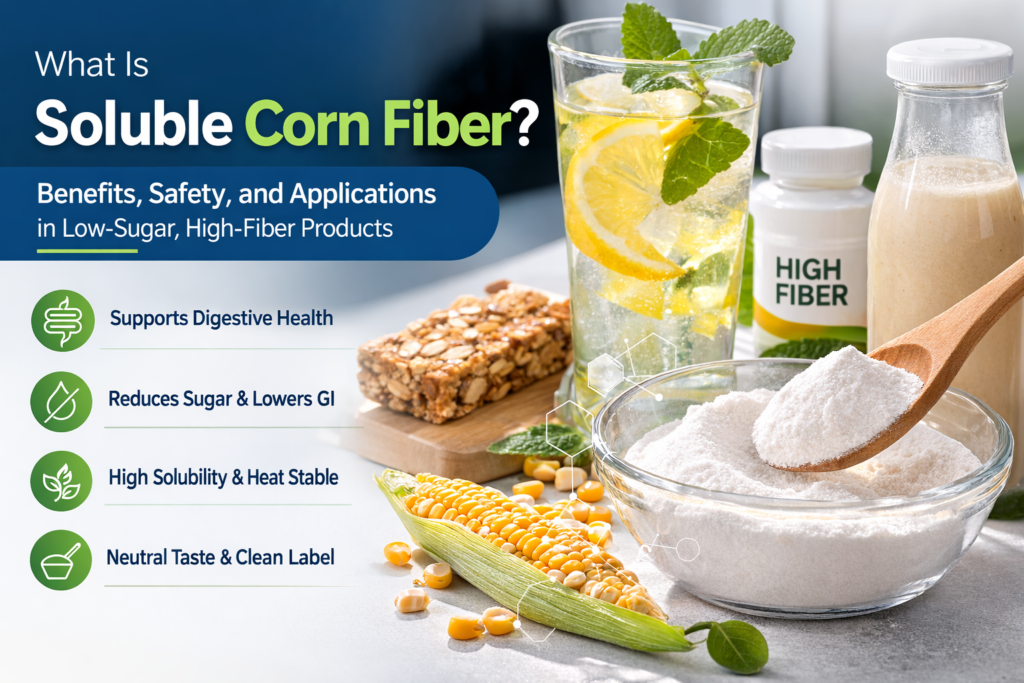
Low-sugar and high-fiber products are becoming one of the fastest-growing segments in the food and supplement industry. Consumers want better metabolic health, improved digestion, and reduced sugar intake, but they still expect good taste and smooth texture. For manufacturers, achieving these goals at the same time can be technically challenging, especially when sugar reduction affects mouthfeel, stability, and product structure.
Soluble corn fiber offers a practical solution. As a highly soluble dietary fiber derived from corn starch, it helps reduce sugar content, increase fiber levels, and maintain excellent processing performance. Because of its neutral taste and strong stability, it is widely used in modern functional foods, beverages, and nutritional supplements.
Soluble corn fiber is used in low-sugar and high-fiber products to improve digestive health positioning, reduce glycemic impact, and maintain texture, stability, and taste in food and supplement formulations.
From fiber drinks to nutrition bars and meal replacements, soluble corn fiber allows brands to create healthier formulations without sacrificing quality. Understanding its benefits, safety profile, and application range helps manufacturers choose the right ingredient strategy.
Soluble corn fiber is a low-digestible carbohydrate that contributes dietary fiber while providing minimal impact on blood glucose levels.
What Is Soluble Corn Fiber?
Soluble corn fiber is a type of resistant dextrin produced through controlled enzymatic processing of corn starch. This process changes the molecular structure of the starch, making it resistant to digestion in the small intestine while remaining highly soluble in water.
It behaves as a soluble dietary fiber with low digestibility and high stability.
Because it is only partially digested, soluble corn fiber contributes very little available energy. Instead, part of it is fermented in the large intestine, supporting beneficial gut bacteria. Its key characteristics include:
- High solubility
- Low viscosity
- Neutral taste
- Strong heat and acid stability
These properties make it suitable for both liquid and solid formulations.
* Soluble corn fiber is classified as dietary fiber in many regulations.
* It provides minimal glycemic impact compared with sugar.
What Are the Main Benefits of Soluble Corn Fiber?
Manufacturers use soluble corn fiber as a functional ingredient to enhance the nutritional value of food and supplement products while maintaining the original sensory characteristics. In many formulations, increasing fiber content can lead to problems such as unwanted thickness, off-flavors, poor solubility, or reduced stability. Soluble corn fiber helps solve these issues because it has high solubility, very low viscosity, and a neutral taste, allowing it to be added at relatively high levels without negatively affecting flavor, color, or mouthfeel. This makes it especially useful in products where texture and drinkability must remain smooth, such as beverages, nutritional powders, dairy alternatives, and meal replacement formulas. By incorporating soluble corn fiber, manufacturers can improve the overall nutritional profile while keeping the product acceptable to consumers and suitable for large-scale processing.
Another important advantage is that soluble corn fiber allows brands to achieve multiple nutrition and marketing positioning goals at the same time. Because it is classified as a dietary fiber in many regulatory systems, it helps increase total fiber content and supports on-label claims such as “high fiber,” “source of fiber,” or similar statements depending on local regulations. In addition, soluble corn fiber is often used in formulations designed for digestive health, since part of the fiber can be fermented in the large intestine and may help support beneficial gut bacteria. It is also widely applied in low-glycemic or reduced-sugar products, because it contributes minimal available carbohydrates and produces a lower blood glucose response compared with traditional sugars or rapidly digestible starches. For manufacturers developing functional foods, sports nutrition, diabetic-friendly products, or weight-management formulas, soluble corn fiber provides a flexible ingredient solution that supports nutritional claims while maintaining stable processing performance.
Key benefits include:
- Increases dietary fiber content
- Supports digestive health positioning
- Helps reduce sugar content
- Maintains smooth mouthfeel
- Improves satiety effect
Because it dissolves completely and does not create thickness, it allows high inclusion levels without affecting sensory quality.
* Soluble fiber supports normal digestive function.
* Fiber enrichment can improve product nutritional value.
How Does Soluble Corn Fiber Help in Low-Sugar Formulation?
Reducing sugar often causes problems such as thin texture, poor mouthfeel, or instability. Soluble corn fiber helps replace part of the sugar while maintaining product structure.
It provides bulk and body with fewer digestible carbohydrates.
In low-sugar formulations, soluble corn fiber can:
- Replace part of sucrose or glucose syrup
- Reduce total calories
- Lower glycemic response
- Improve mouthfeel in reduced-sugar products
This makes it ideal for products targeting metabolic health and weight control.
* Fiber substitution lowers available carbohydrates.
* Low-GI positioning is easier with soluble fiber.
What Products Commonly Use Soluble Corn Fiber?
Because of its excellent solubility and stability, soluble corn fiber is used in many food and supplement categories.
It works well in beverages, powders, bars, and dairy alternatives.
Typical applications include:
- Functional beverages
- Fiber supplements
- Meal replacement powders
- Nutrition bars
- Dairy and plant-based drinks
- Gummies and confectionery
Its neutral taste allows high fiber levels without affecting flavor systems.
* High solubility allows use in clear beverages.
* Neutral flavor supports multiple formulations.
Is Soluble Corn Fiber Safe for Daily Consumption?
Soluble corn fiber is widely used in food and supplements and is generally recognized as safe when consumed within recommended levels.
Moderate intake is well tolerated by most consumers.
Like other soluble fibers, excessive intake may cause temporary digestive discomfort in some individuals. For this reason, manufacturers should:
- Control serving size
- Follow local regulations
- Provide clear labeling
When used correctly, it is suitable for daily consumption in functional foods.
* Soluble corn fiber is approved for food use in many countries.
* Gradual intake improves tolerance.
What Should Manufacturers Consider When Sourcing Soluble Corn Fiber?
Ingredient quality directly affects product performance and label claims. Not all soluble corn fiber products have the same purity or stability.
Reliable suppliers provide consistent specifications and certifications.
Important factors include:
- Fiber content
- Solubility profile
- Moisture level
- Microbiological limits
- Certifications (GMP / ISO / HACCP)
Stable supply and technical support help manufacturers reduce formulation risk.
* Consistent specifications ensure label accuracy.
* Certified factories reduce quality risk.
Conclusion
Soluble corn fiber has become an important ingredient for modern low-sugar and high-fiber product development. It allows manufacturers to improve nutritional value, reduce glycemic impact, and maintain excellent taste and stability across multiple product formats.
For brands focused on functional foods, supplements, and health-oriented formulations, soluble corn fiber provides a reliable solution that supports both processing performance and market positioning. Choosing a qualified supplier ensures consistent quality, regulatory compliance, and long-term product success.