Many supplement brands rely on magnesium stearate during manufacturing — yet confusion remains around its purpose, safety, and regulatory status.
This leads to hesitation during formulation, miscommunication with consumers, and potential production inefficiencies.
Understanding how magnesium stearate works empowers you to produce stable, consistent, and compliant supplements at scale.
Magnesium stearate is one of the most widely used excipients in dietary supplements. It enables smooth manufacturing, prevents sticking, improves blend uniformity, and supports high-speed tablet or capsule production. This guide explains its functions, benefits, safety profile, and global regulatory considerations.
Before incorporating magnesium stearate into your formulation, it’s essential to understand how it performs, where it adds value, and how regulatory bodies view its use. The sections below offer a complete technical overview tailored for supplement brands and OEM/ODM manufacturers.
Table of Contents
- What Is Magnesium Stearate and Why Is It Used in Supplements?
- How Does Magnesium Stearate Improve Manufacturing Efficiency?
- Is Magnesium Stearate Safe? What Does the Science Say?
- Regulatory Requirements for Magnesium Stearate in Supplements
- How to Choose the Right Grade for Your Supplement Formula
- How Manufacturers Can Reduce Consumer Concerns About Magnesium Stearate
1. What Is Magnesium Stearate and Why Is It Used in Supplements?
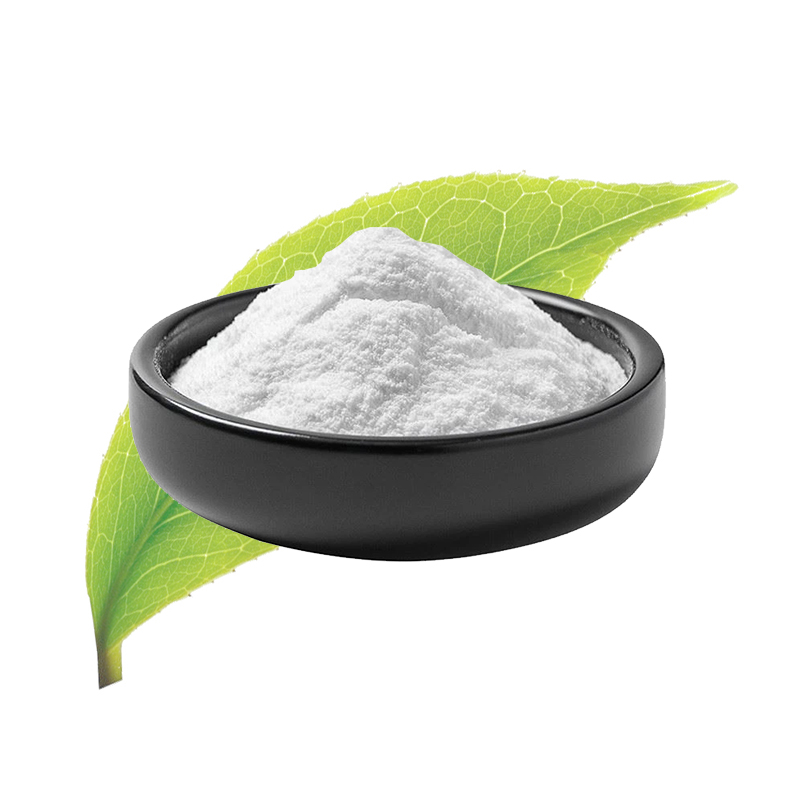
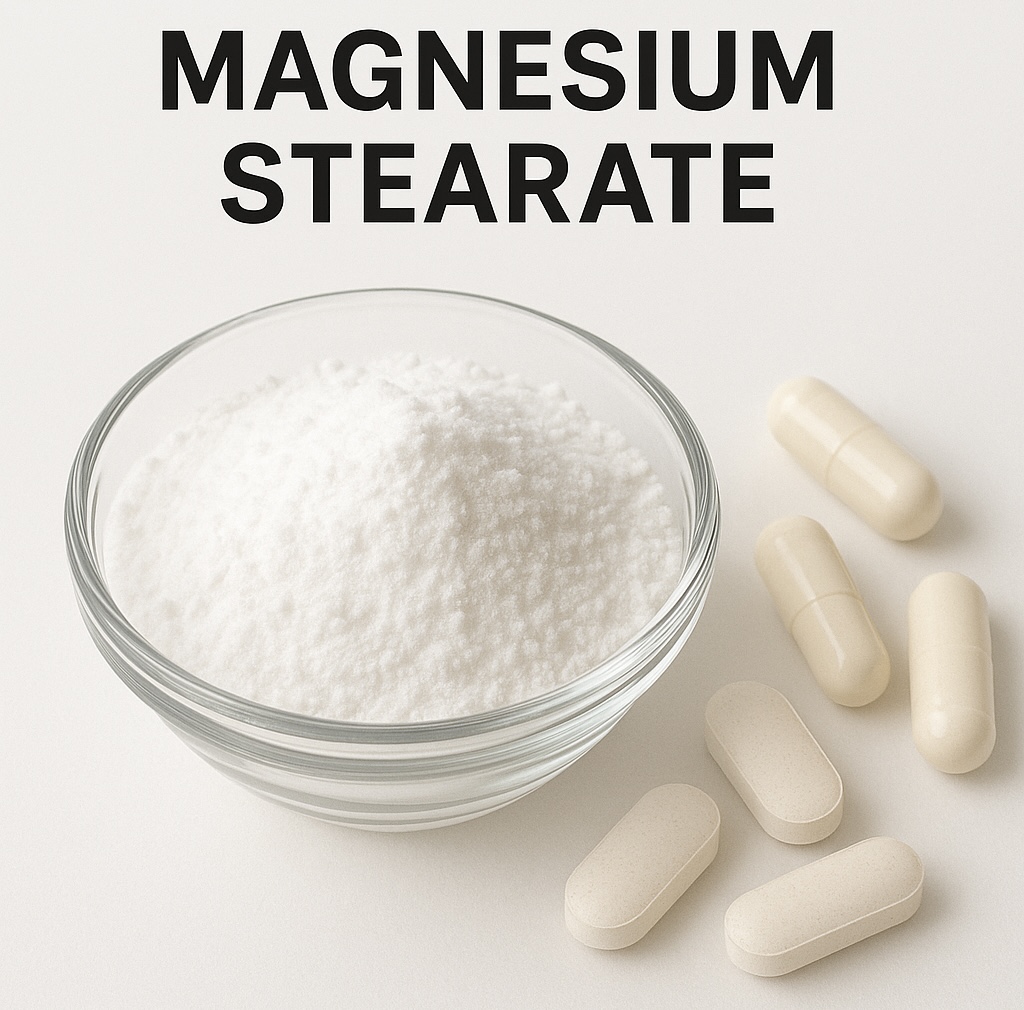
Magnesium stearate is a pharmaceutical-grade lubricant widely used in tablets, capsules, and powder supplement blends. It is formed by combining magnesium with stearic acid, a naturally occurring fatty acid.
Its primary role is to prevent ingredients from sticking to manufacturing equipment, improving processing efficiency and product consistency.
Magnesium stearate reduces friction between powder particles and machine components. This ensures powders flow smoothly through feeders, blend consistently, and compress evenly during tablet formation. Without it, production speed drops, blends segregate, and tablets may chip, crack, or show inconsistent hardness.
* Prevents sticking and mechanical wear on tablet punches and capsule filling components.
* Supports stable tablet structure and uniform capsule fill weight.
2. How Does Magnesium Stearate Improve Manufacturing Efficiency?
For high-speed manufacturing, magnesium stearate plays an essential role in maintaining smooth process flow.
It enhances flowability, improves blend uniformity, and ensures smooth ejection during compression.
Magnesium stearate coats each particle in the blend, reducing friction and improving flow. This allows tablet punches to release cleanly, capsule machines to fill accurately, and powder blends to remain stable during transfer. Manufacturers experience fewer production stoppages, reduced waste, and more consistent batch quality.
* Reduces compression force required for uniform tablets.
* Minimizes downtime caused by sticking, clumping, or mechanical drag.
3. Is Magnesium Stearate Safe? What Does the Science Say?
Despite frequent consumer concerns, global regulators classify magnesium stearate as safe for use in supplements.
Extensive toxicological data confirms that magnesium stearate is non-toxic, non-reactive, and metabolized naturally by the body.
Magnesium stearate is broken down into magnesium and stearic acid — both common in foods. Studies show no negative effects on nutrient absorption at normal use levels. Its inert nature ensures compatibility with vitamins, minerals, probiotics, herbal extracts, and functional ingredients.
* Recognized as GRAS by the FDA and listed as an approved excipient by global pharmacopeias.
* Clinical studies show no interference with nutrient absorption or bioavailability.
4. Regulatory Requirements for Magnesium Stearate in Supplements
Global markets accept magnesium stearate, but each region enforces specific quality and purity standards.
Compliance requirements typically cover purity level, heavy metal limits, microbial standards, and manufacturing processes.
Authorities such as USP, FCC, EFSA, and JECFA list magnesium stearate as an approved excipient. Manufacturers must ensure it meets pharmacopeial grade standards, including particle size, fatty acid profile, and low contaminant levels. For export markets, documentation such as COA, MSDS, TDS, and regulatory dossiers may be required.
* Meets USP/NF and European Pharmacopeia requirements.
* GMP-compliant manufacturing ensures global market acceptance.
5. How to Choose the Right Grade for Your Supplement Formula?
Selecting the proper grade is essential for consistent tablet and capsule performance.
Different particle sizes and manufacturing methods influence flowability, dissolution, and compressibility.
Water-processed magnesium stearate provides cleaner performance, superior flow, and improved lubricity. Fine particle grades are preferred for small tablets, while coarser grades suit high-speed equipment. Your ideal grade depends on your blend’s density, moisture content, and active ingredient sensitivity.
* Water-processed grades offer enhanced purity and lubrication.
* Custom grades can optimize flow, hardness, and release profiles.
6. How Manufacturers Can Reduce Consumer Concerns About Magnesium Stearate
Consumer hesitation often stems from misunderstanding rather than scientific evidence.
Clear labeling, transparent sourcing, and regulatory documentation help build trust.
Brands can reassure consumers by highlighting the ingredient’s natural origin, established safety record, and global regulatory acceptance. Offering optional “low-use” or alternative excipient systems also supports brand positioning for clean-label markets.
* Educating consumers improves confidence and reduces misinformation.
* Transparency in sourcing strengthens brand credibility.
Conclusion
Magnesium stearate is a critical excipient that supports efficient supplement manufacturing, stable formulations, and global compliance. When selected and applied correctly, it enhances both product quality and production speed — making it a foundational component for modern supplement brands.
Conclusion Content Summary
- Essential lubricant and flow agent in supplement manufacturing
- Proven safe by major regulatory bodies
- Enhances blend uniformity, compressibility, and ejection
- Helps brands meet global regulatory standards
- Supports clean-label positioning through transparent sourcing