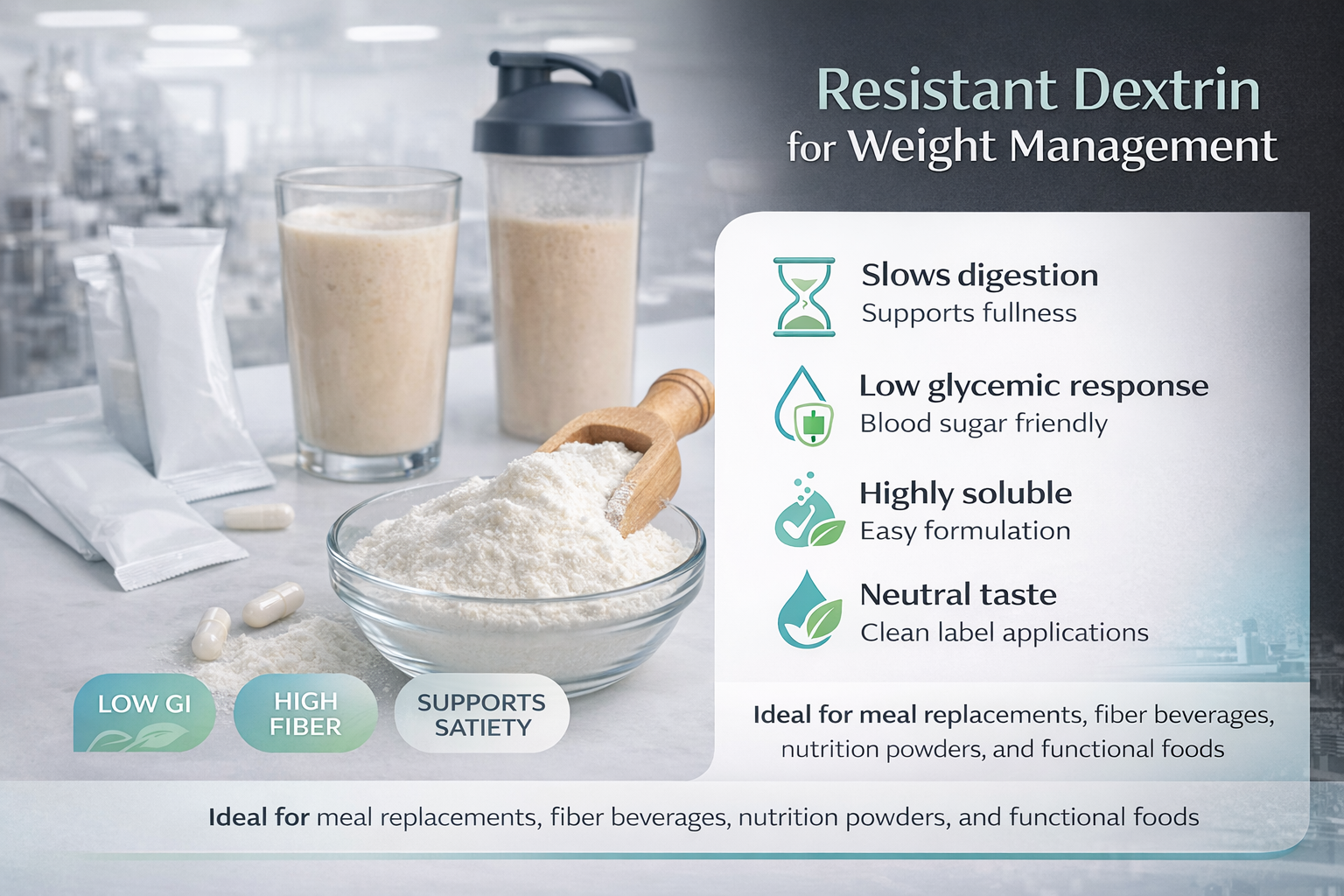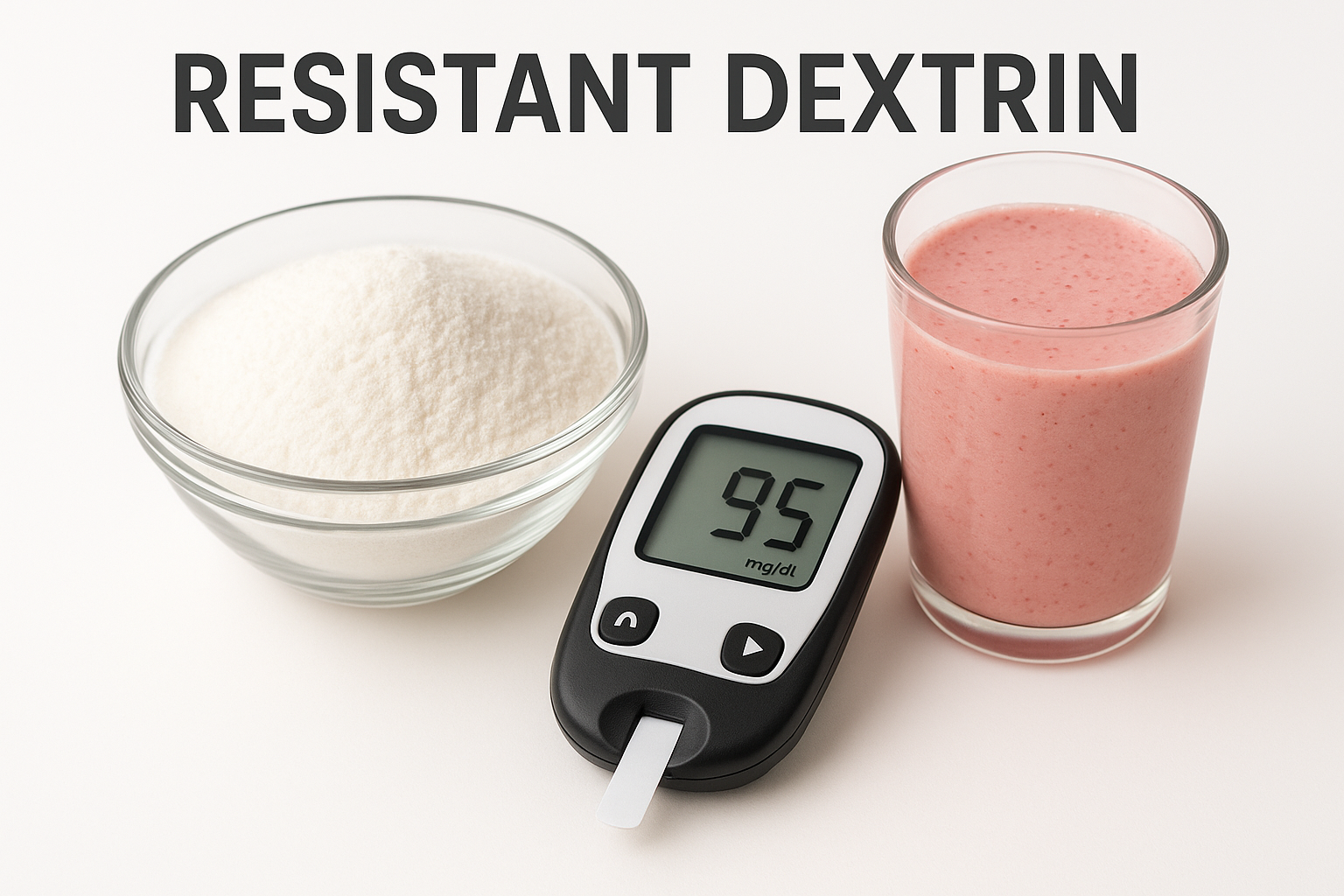
Weight management remains one of the most active and competitive segments in the functional food and supplement industry. Consumers are not only looking for calorie control, but also products that support satiety, portion control, and sustained energy. For manufacturers, the challenge is to create formulations that reduce energy density while maintaining taste, texture, and consumer acceptance.
Resistant dextrin provides a practical solution. As a low-calorie soluble dietary fiber, it helps increase fullness, reduce overall energy intake, and support weight management positioning without negatively affecting product quality.
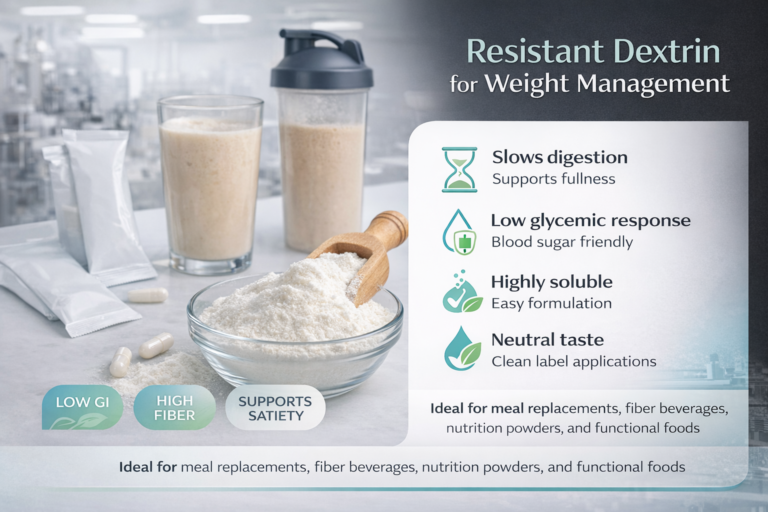
Resistant dextrin helps manufacturers develop weight management products by increasing satiety, lowering calorie density, and maintaining excellent solubility and sensory performance.
From meal replacements to functional beverages and nutrition bars, satiety-driven formulations are gaining strong market demand. Understanding how resistant dextrin works and where it delivers the most value can help brands create more effective and competitive weight management products.
Soluble dietary fibers such as resistant dextrin can support satiety and help reduce overall energy intake when included in balanced nutrition products.
Why Is Satiety Important in Weight Management Products?
Successful weight management products must do more than reduce calories. If consumers feel hungry soon after consumption, long-term compliance becomes difficult and product satisfaction decreases.
Satiety helps control portion size, reduce snacking frequency, and improve consumer adherence.
Ingredients that promote fullness slow gastric emptying and create a longer-lasting feeling of satisfaction. This leads to:
- Reduced between-meal snacking
- Lower daily calorie intake
- Improved product effectiveness
- Higher consumer loyalty
Satiety is now a key positioning factor in weight control beverages, bars, and nutritional powders.
* Satiety-supporting products help reduce overall energy consumption.
* Fiber-enriched formulations are widely used in weight management strategies.
How Does Resistant Dextrin Support Fullness and Appetite Control?
Resistant dextrin contributes to satiety through both physical and physiological mechanisms.
As a soluble fiber, it increases gastrointestinal content and supports slower digestion.
Key satiety mechanisms include:
- Increased stomach volume after consumption
- Slower gastric emptying
- Fermentation in the large intestine producing short-chain fatty acids
- Support for appetite-regulating hormone responses
These combined effects help extend fullness between meals, making resistant dextrin suitable for appetite control formulations.
* Soluble fibers can prolong feelings of fullness after consumption.
* Fermentable fibers contribute to metabolic signals related to appetite regulation.
How Does Resistant Dextrin Help Reduce Calorie Density?
Energy density plays a critical role in weight management product design. Resistant dextrin allows manufacturers to replace higher-calorie carbohydrates without compromising bulk or texture.
It provides formulation volume with significantly fewer available calories than digestible carbohydrates.
By partially replacing sugars, maltodextrin, or other digestible carbohydrates, resistant dextrin helps:
- Lower total caloric value
- Increase dietary fiber content
- Improve nutritional profile
- Support “low calorie” or “reduced calorie” positioning (subject to local regulations)
This approach is widely used in slimming products, meal replacements, and light functional foods.
* Fiber substitution reduces overall energy density in formulations.
* Lower energy density supports weight control strategies.
Which Product Formats Benefit Most from Resistant Dextrin?
Resistant dextrin’s excellent solubility and low viscosity allow high inclusion levels across multiple product formats.
It is especially effective in liquid systems and powdered nutrition products.
Common applications include:
- Meal replacement shakes and powders
- Weight management beverages
- Protein supplements
- Nutrition and diet bars
- Dairy and plant-based alternatives
Because it dissolves completely and does not significantly increase viscosity, it maintains smooth texture and good drinkability even at higher fiber levels.
* Resistant dextrin provides high solubility with minimal viscosity impact.
* Neutral taste allows flexible use across multiple flavor systems.
What Functional Advantages Does Resistant Dextrin Offer in Processing?
Industrial stability is essential for large-scale production. Resistant dextrin performs reliably under common manufacturing conditions.
It maintains functionality during heat treatment, spray drying, and long-term storage.
Key processing benefits include:
- Heat stability for pasteurization and UHT
- Acid stability for flavored beverages
- Low hygroscopicity for improved powder handling
- Good flowability for automated filling and packaging
These characteristics reduce processing challenges and improve production efficiency.
* Resistant dextrin remains stable across a wide temperature and pH range.
* Good flow properties support consistent large-scale manufacturing.
What Should Manufacturers Evaluate When Sourcing Resistant Dextrin?
Raw material quality directly affects product performance, label claims, and regulatory compliance.
Reliable suppliers provide consistent specifications, certifications, and technical support.
Key sourcing criteria include:
- Total dietary fiber content
- Solubility and viscosity characteristics
- Microbiological and heavy metal limits
- Certifications (GMP, ISO, HACCP, Halal/Kosher if required)
- Application and formulation support
A qualified supplier helps ensure product consistency, regulatory readiness, and long-term supply security.
* Consistent fiber specifications are essential for accurate labeling.
* Certified manufacturing systems reduce quality and compliance risks.
Conclusion
As demand for effective weight management solutions continues to grow, satiety-focused formulation has become a critical success factor. Resistant dextrin enables manufacturers to increase fullness, reduce calorie density, and enhance fiber content while maintaining excellent taste, stability, and processing performance.
For B2B brands, it offers a strategic advantage: improved nutritional positioning, flexible application across multiple product formats, and stronger differentiation in the competitive weight management market. Selecting a high-quality resistant dextrin supplier ensures consistent performance, regulatory compliance, and long-term product success.