Many food and nutrition brands face the same problem today. Products must deliver better health benefits, but they also need to keep texture, stability, and cost under control. Traditional starches often fail this test. They digest too quickly, raise blood sugar fast, and offer limited functional value beyond thickening.
This creates pressure for manufacturers. Consumers now read labels carefully. Regulators look closely at health claims. Buyers want ingredients that support fiber, low-GI positioning, and clean-label trends, without changing taste or processing behavior.
High amylose corn starch solves this problem. It offers a unique starch structure that behaves differently during digestion and processing. For manufacturers, it opens the door to resistant starch claims, functional nutrition positioning, and improved formulation flexibility. That is why it has become a strategic ingredient across food, beverage, and supplement categories.
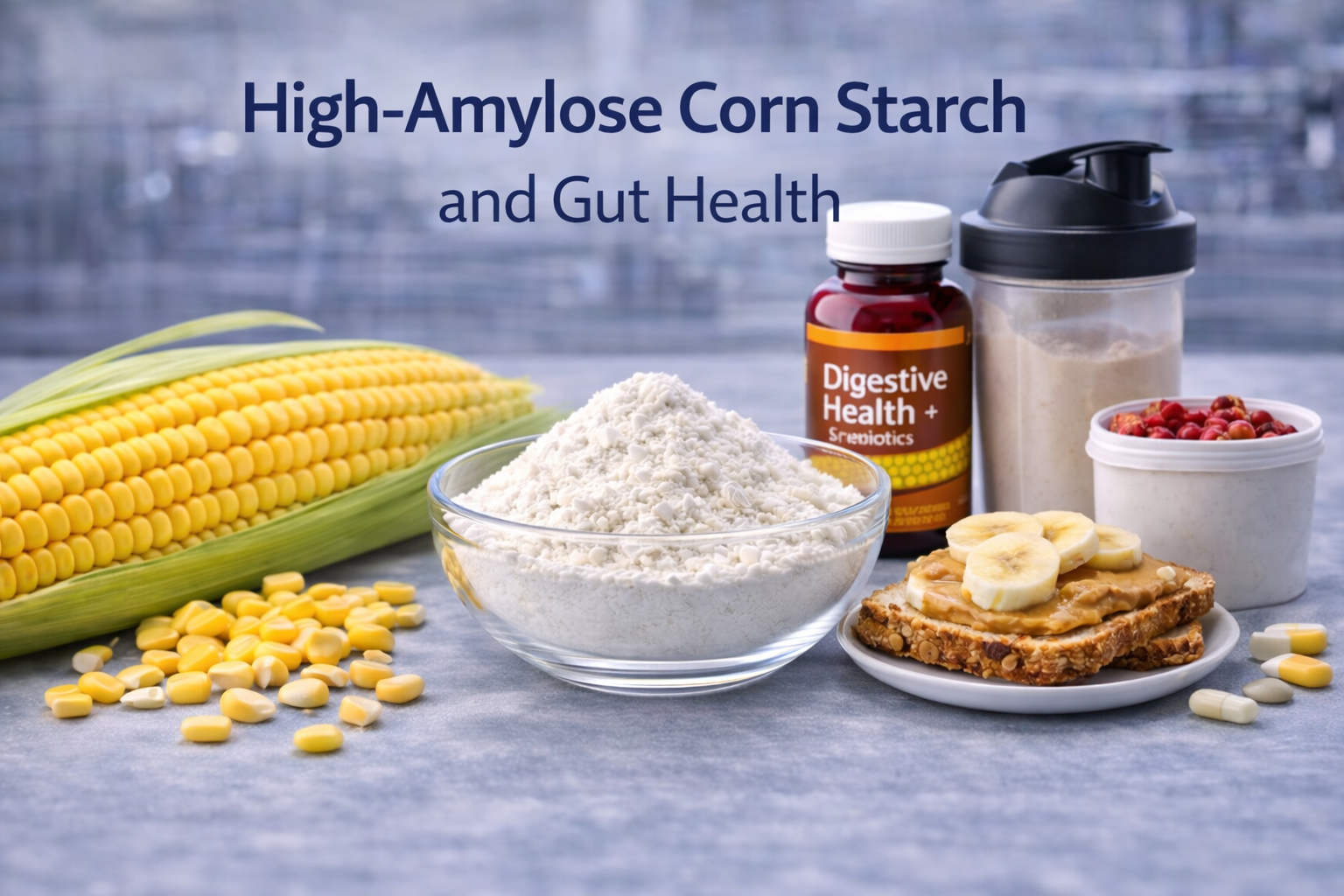
High amylose corn starch is a type of corn-derived starch with a higher amylose content than standard corn starch. While regular corn starch contains about 20–30% amylose, high-amylose corn starch typically contains 50–70% or more. This higher amylose level changes how the starch behaves in food systems and in the human body.
Because of its structure, high-amylose corn starch is digested more slowly. A portion resists digestion in the small intestine and functions as resistant starch. This supports lower glycemic response and contributes dietary fiber benefits. In food applications, it provides stability, heat resistance, and improved texture control. These properties make it suitable for functional foods, low-GI products, fiber-enriched formulations, and clean-label applications.
Understanding what high-amylose corn starch is only answers part of the question. To use it effectively, buyers and formulators also need to understand how it differs from regular starch, how it functions in processing, and where it delivers the most value. The following sections break this down step by step.
What Makes High Amylose Corn Starch Different from Regular Starch?
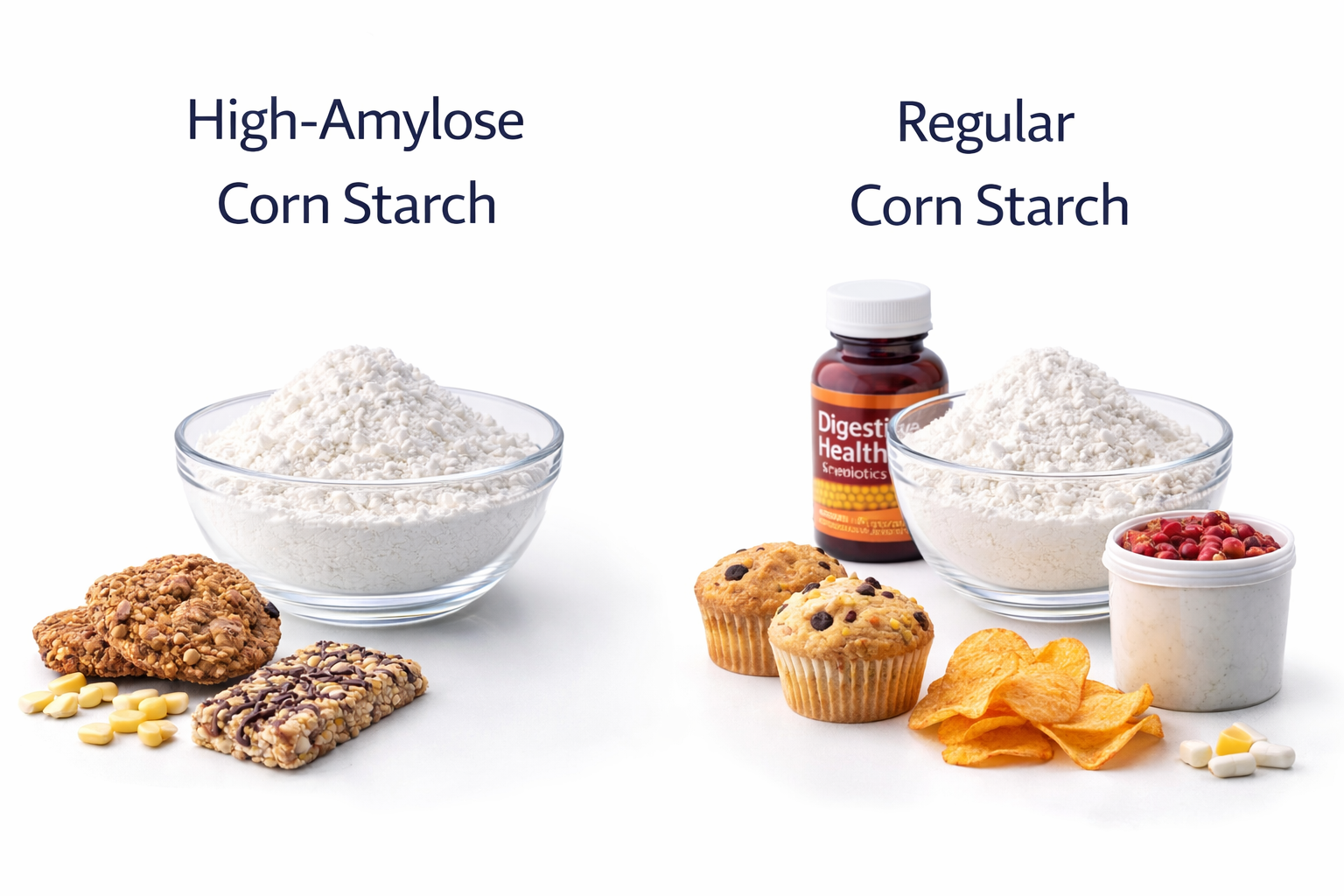
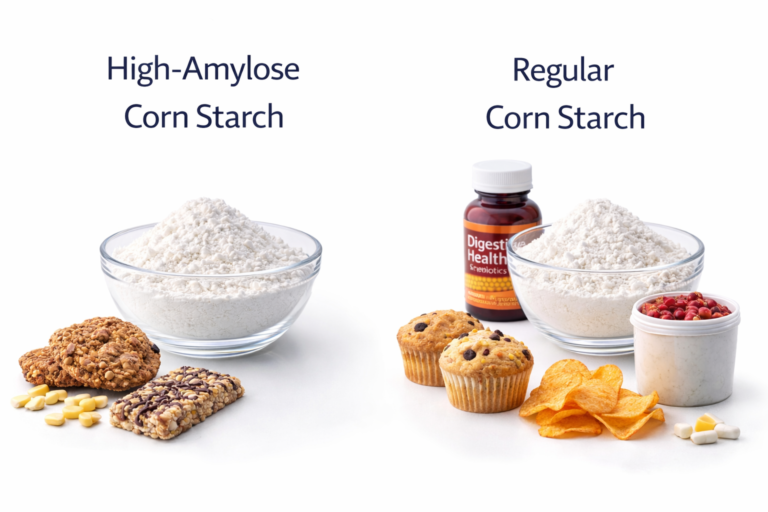
The main difference lies in molecular structure. Corn starch is made of two polymers: amylose and amylopectin. Regular corn starch contains more amylopectin, which digests quickly and gelatinizes easily. High-amylose corn starch contains much more amylose, which forms tighter, more linear chains. This difference affects digestion, processing behavior, and final product performance.
High-amylose corn starch differs from regular corn starch due to its higher amylose content, which leads to slower digestion, stronger gel structure, and increased resistant starch formation.
| Property | Regular Corn Starch | High-Amylose Corn Starch |
|---|---|---|
| Amylose Content | 20–30% | 50–70%+ |
| Digestibility | Rapid | Slow / Partial resistance |
| Glycemic Impact | Higher | Lower |
| Gel Strength | Moderate | Strong |
| Heat Stability | Limited | High |
Because of this structure, high-amylose starch offers benefits beyond thickening. It supports fiber labeling, improved texture stability, and better nutritional positioning.
* Higher amylose content supports resistant starch formation
* Structural difference drives both nutritional and functional benefits
How Is High-Amylose Corn Starch Produced?
High-amylose corn starch is produced from specially bred corn varieties. These corn lines are selected for their natural ability to produce higher amylose levels. The starch extraction process itself is similar to conventional corn starch processing, but raw material selection is critical.
High-amylose corn starch is produced from high-amylose corn varieties using standard wet-milling methods.
Production steps include:
- Selection of high-amylose corn hybrids
- Wet milling and starch separation
- Controlled drying and grading
- Functional testing for amylose level and performance
The result is a consistent ingredient that meets food-grade specifications while delivering functional and nutritional advantages.
* Non-GMO and GMO options are available depending on source
* Processing maintains starch purity and functionality
Why Does High-Amylose Corn Starch Act as Resistant Starch?
Not all starch behaves the same during digestion. The linear structure of amylose resists enzyme breakdown. This allows part of high-amylose corn starch to pass into the large intestine undigested.
High-amylose corn starch resists digestion because its amylose chains are tightly packed into a dense structure. These linear molecules form strong bonds that limit enzyme access. Unlike regular starch, it gelatinizes less during digestion, so enzymes cannot easily break it down. As a result, part of it passes through the small intestine undigested and acts as resistant starch, supporting slower glucose release..
| Digestive Stage | Behavior |
|---|---|
| Small Intestine | Partial resistance |
| Large Intestine | Fermentation by gut bacteria |
| Outcome | Short-chain fatty acid production |
This mechanism supports gut health positioning and fiber claims, making it attractive for functional nutrition products.
* Acts as a source of dietary fiber
* Supports low-glycemic formulations
What Are the Main Functional Benefits in Food Formulation?
Beyond nutrition, high-amylose corn starch performs well during processing. Its dense structure helps it stay stable under high heat and strong shear forces. This stability suits demanding industrial conditions. It helps products keep consistent texture and quality during production, even in tough processing environments.
High-amylose corn starch improves texture, stability, and processing tolerance.
Key benefits include:
- Improved thermal stability
- Strong gel formation
- Reduced stickiness
- Enhanced shelf stability
These traits are valuable in baked goods, snacks, and extruded products.
* Suitable for high-temperature processing
* Enhances product consistency
Where Is High-Amylose Corn Starch Commonly Used?
Its versatility allows it to work across many food categories. Brands use high-amylose corn starch in products where both nutrition and processing performance matter. It supports fiber enrichment while also improving texture, stability, and shelf life. This balance helps manufacturers develop foods that meet health demands without sacrificing product quality or production efficiency.
High-amylose corn starch is widely used in functional foods, baked goods, snacks, and nutritional products. It helps increase fiber content while supporting texture and structure. In baked goods and snacks, it improves crispness and stability. In nutritional products, it supports digestive health without affecting taste or processing performance.
| Application | Purpose |
|---|---|
| Bakery | Fiber enrichment, texture |
| Snacks | Structure, low-GI positioning |
| Nutrition Bars | Resistant starch source |
| Meal Replacements | Controlled digestion |
* Supports fiber and low-GI product claims
* Compatible with clean-label strategies
How Should Manufacturers Choose the Right Grade?
Not all high-amylose starches deliver the same results. Differences in amylose content affect resistance to digestion and functional performance. Particle size influences texture, dispersion, and processing behavior. Processing conditions also shape stability and final product quality. Careful selection helps brands achieve consistent performance and targeted nutrition goals.
Choosing the right grade depends on application and processing needs.
Key selection factors:
- Amylose level
- Regulatory compliance
- Application temperature
- Texture targets
Working with an experienced supplier ensures consistency and technical support.
* Grade selection impacts final product performance
* Supplier expertise reduces formulation risk
Conclusion
High-amylose corn starch is more than a modified starch. It is a functional, nutrition-driven ingredient designed for modern food and supplement formulations. Its unique amylose structure supports resistant starch benefits, low glycemic response, and improved processing stability. For manufacturers focused on fiber enrichment, clean-label positioning, and functional performance, it offers clear advantages over regular starch.
For manufacturers seeking a reliable supply of high-amylose corn starch, working with a specialized ingredient producer matters. Consistent quality, stable specifications, and formulation support help reduce development time and production risk. High-amylose corn starch from a qualified factory allows brands to move faster, meet regulatory needs, and deliver products that align with today’s nutrition trends.