The market for functional foods and supplements is growing fast. Buyers want products that support digestion, control blood sugar, and reduce sugar intake. At the same time, they expect good taste and smooth texture. This creates a problem for manufacturers. Many fiber ingredients change flavor, create thickness, or fail under heat and acid. These issues slow development and increase cost.
Brands need a fiber that works in real production. It must dissolve well, keep a light texture, and stay stable during processing. It must also support clear label claims. Without this, it is hard to scale products across markets.
Resistant dextrin solves these challenges. It is a soluble fiber with high stability, low viscosity, and neutral taste. It supports high-fiber and low-GI positioning while keeping product quality. This makes it a strong choice for modern formulation.
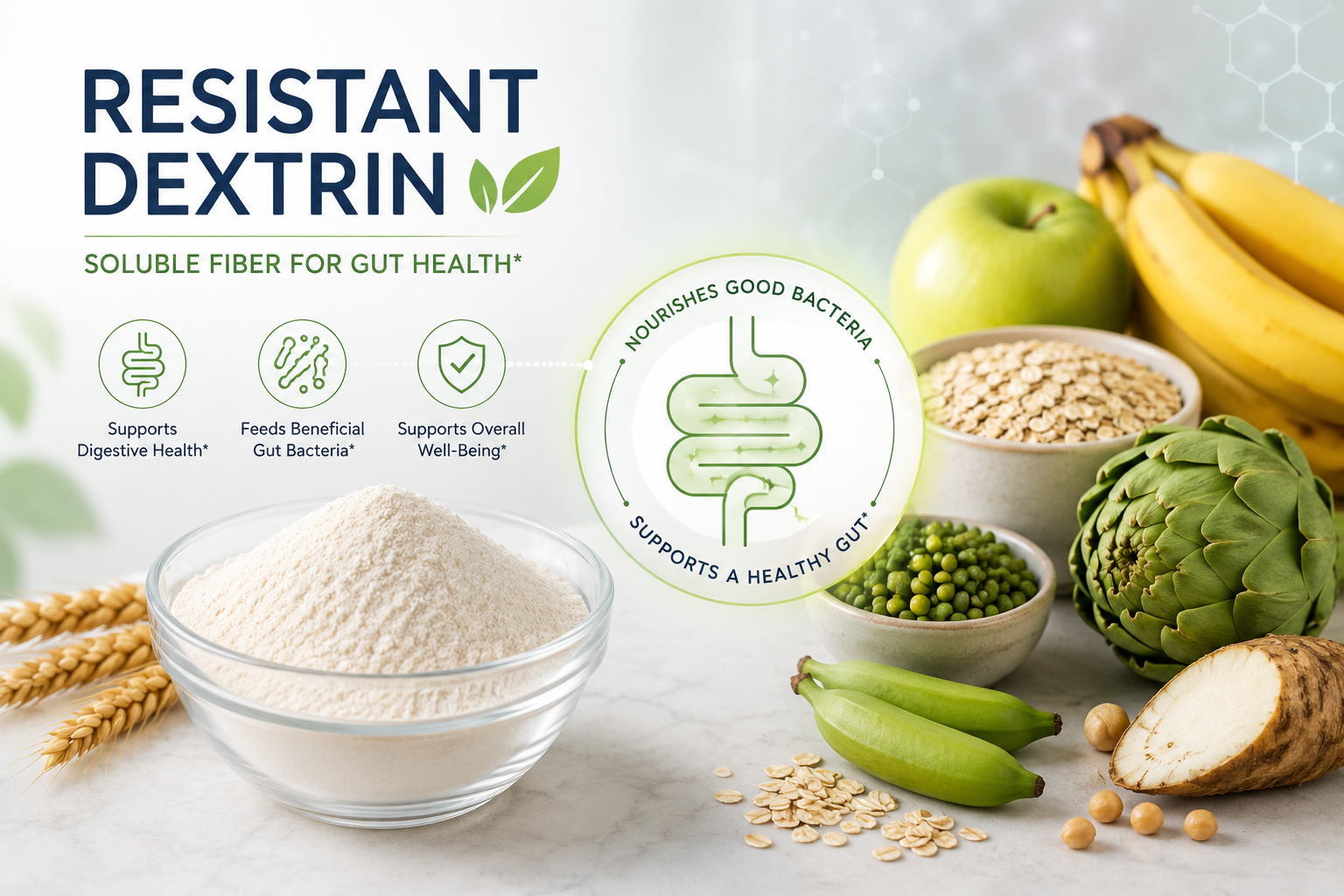
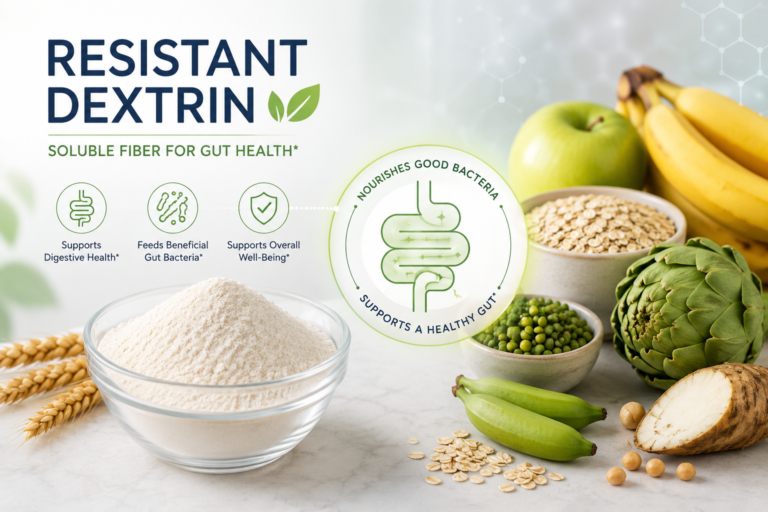
Resistant dextrin is a soluble dietary fiber used in food and supplements to increase fiber content, reduce sugar impact, and improve formulation performance. It dissolves easily, has low viscosity, and does not affect taste. Because of these features, it is widely used in beverages, powders, and functional foods to support digestive health and low-GI product positioning.
The demand for soluble fiber will continue to grow. But not every fiber works in every product. Some fibers fit bars but not drinks. Some work in small batches but fail in large production. To choose the right solution, it is important to understand how resistant dextrin works and where it fits best.
What Is Resistant Dextrin and How Is It Made?
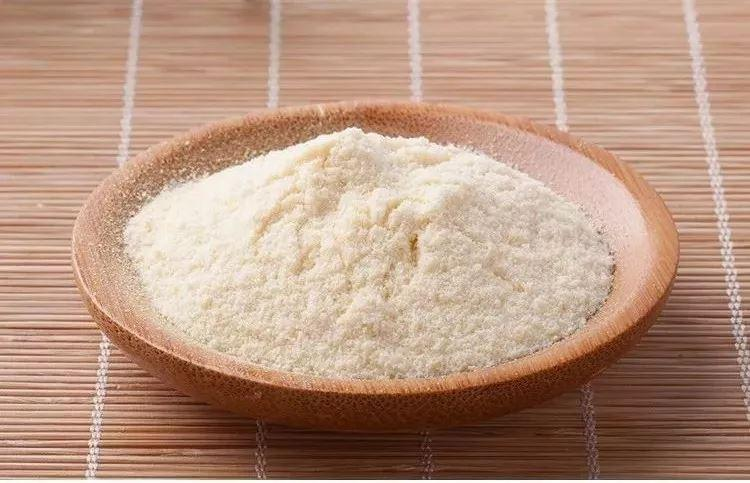
Resistant dextrin is a soluble dietary fiber produced from starch, usually corn or tapioca. The starch goes through controlled heat and enzymatic treatment. This process changes the molecular structure. The result is a fiber that resists digestion in the small intestine but dissolves easily in water.
Resistant dextrin is a processed starch that acts as a soluble fiber with high stability and low digestibility.
Production steps
| Step | Purpose |
|---|---|
| Heat treatment | break starch structure |
| Enzymatic process | control chain length |
| Purification | remove impurities |
| Drying | form stable powder |
Key properties
| Property | Benefit |
|---|---|
| High solubility | easy to use in drinks |
| Low viscosity | smooth texture |
| Heat stability | works in processing |
| Neutral taste | no flavor impact |
* Resistant dextrin is widely used as a soluble fiber.
* Its structure allows low digestibility and high stability.
What Health Benefits Does Resistant Dextrin Provide?
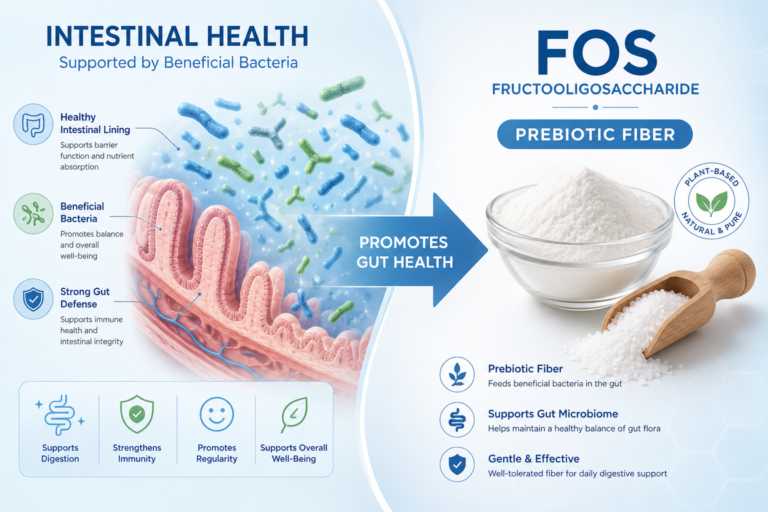
Resistant dextrin supports several health functions. Because it is not fully digested, it reaches the large intestine. There, it can be used by beneficial bacteria. This supports gut balance and digestive function.
Resistant dextrin supports digestive health, helps control blood sugar, and contributes to satiety.

Main benefits
| Benefit | Effect |
|---|---|
| Digestive support | feeds good bacteria |
| Low GI impact | slower glucose release |
| Satiety | helps control intake |
| Fiber intake | supports daily needs |
Mechanism
- passes undigested to colon
- partially fermented
- produces beneficial metabolites
* Soluble fiber supports digestive health.
* Low digestibility helps reduce glycemic response.
Why Is Resistant Dextrin Ideal for Food and Supplement Formulation?
Formulation is not only about delivering nutritional value. It must also consider how an ingredient behaves during processing and throughout the product’s shelf life. In real manufacturing conditions, ingredients are exposed to heat, mixing, shear force, moisture, and different pH levels. If a fiber ingredient cannot remain stable under these conditions, it may lead to inconsistent texture, poor solubility, or reduced product quality. For this reason, processing performance and stability are just as important as nutritional function when selecting ingredients.
Many traditional dietary fibers create formulation challenges. Some fibers increase viscosity too quickly, which can make beverages thick, cloudy, or difficult to drink. Others may introduce off-flavors, bitterness, or unwanted mouthfeel, which reduces consumer acceptance. In powder systems, certain fibers can cause poor flowability, clumping, or uneven mixing, which affects production efficiency and dosing accuracy. These issues often limit how much fiber can be added to a formulation.
Resistant dextrin helps solve these problems. It has high solubility and very low viscosity, so it can be added at higher levels without making the product thick or heavy. It also has a neutral taste, so it does not interfere with flavor systems in either sweet or savory products. In addition, it shows strong stability under heat, acid, and processing stress, making it suitable for beverages, powders, and other functional foods. Because of these properties, resistant dextrin allows manufacturers
It provides fiber without affecting taste, texture, or processing performance.
Functional advantages
| Feature | Value |
|---|---|
| High solubility | clear drinks |
| Low viscosity | smooth mouthfeel |
| Stability | heat and acid resistant |
| Neutral taste | flexible use |
Processing benefits
- easy mixing
- stable during heating
- good powder flow
* Resistant dextrin improves formulation flexibility.
* Stable ingredients reduce production risk.
How Does Resistant Dextrin Compare with Other Fibers?
Different fibers have different roles. Some give strong texture. Some give sweetness. Resistant dextrin focuses on stability and flexibility.
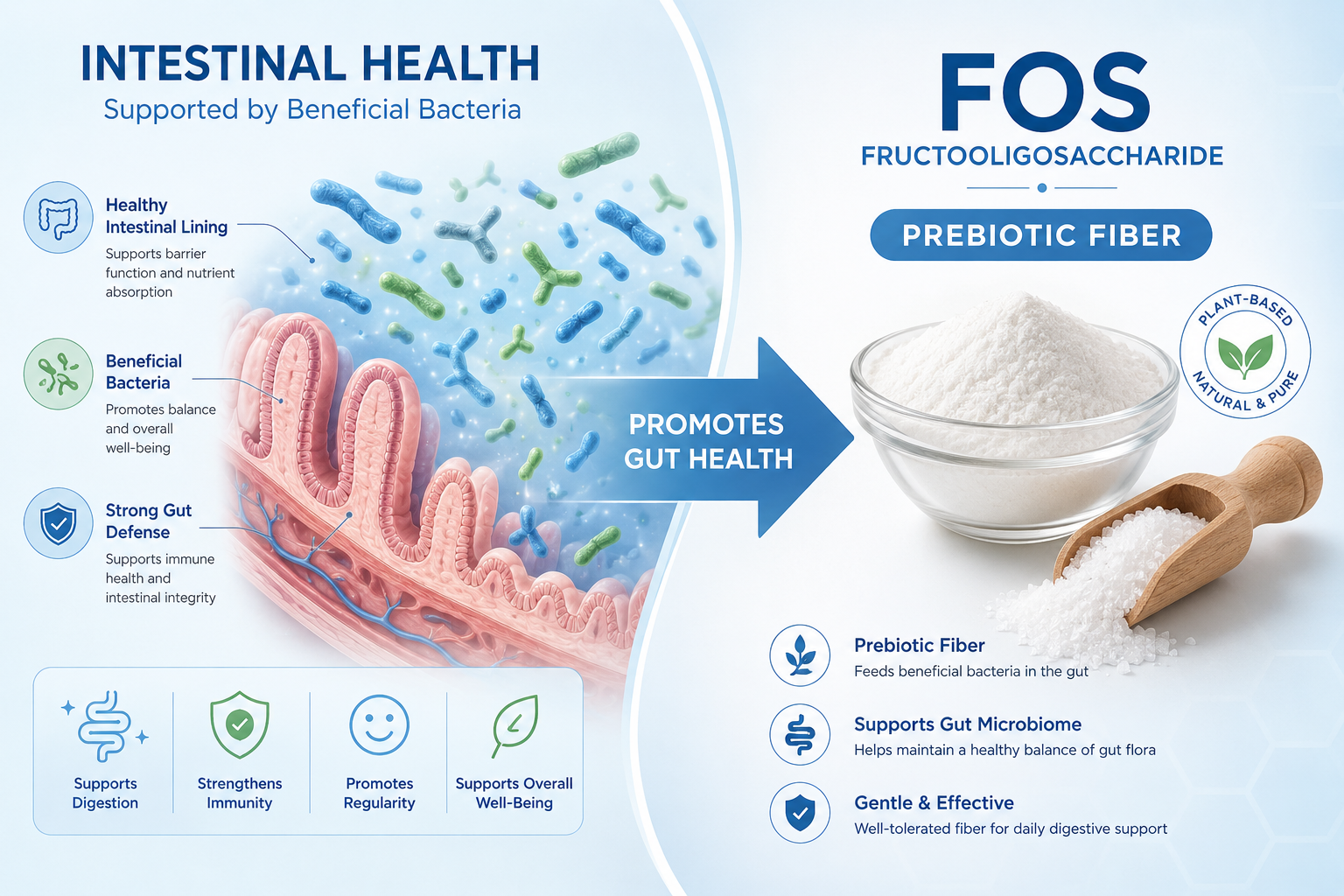
Compared with inulin and FOS, resistant dextrin offers better solubility and lower viscosity.
Comparison
| Property | Inulin | FOS | Resistant dextrin |
|---|---|---|---|
| Solubility | medium | high | very high |
| Viscosity | medium | low | very low |
| Stability | medium | medium | high |
| Taste | slight | sweet | neutral |
Application fit
| Product | Best choice |
|---|---|
| beverage | dextrin |
| bar | inulin |
| sweet product | FOS |
* Resistant dextrin works best in liquid systems.
* Low viscosity is key for modern products.
Where Is Resistant Dextrin Used in Real Products?
Resistant dextrin is used across many product types. Its flexibility allows use in both food and supplements.
It is widely used in beverages, powders, bars, and dairy alternatives.
Applications
| Product | Role |
|---|---|
| beverages | fiber enrichment |
| powders | flow and mix |
| bars | nutrition boost |
| dairy | texture support |
Use cases
- meal replacement
- sports nutrition
- weight management
- digestive health products
* Resistant dextrin fits multiple categories.
* Neutral taste supports wide use.
What Should Buyers Consider When Sourcing Resistant Dextrin?
Quality differences affect final products. Buyers must check specifications and supplier reliability.
Stable quality and certification are key for sourcing decisions.
Key checks
| Item | Reason |
|---|---|
| fiber content | label claim |
| solubility | performance |
| purity | safety |
| moisture | stability |
Supplier factors
| Factor | Importance |
|---|---|
| certification | quality control |
| capacity | supply stability |
| experience | technical support |
* Reliable suppliers ensure consistency.
* Certification reduces compliance risk.
Conclusion
Resistant dextrin is a practical soluble fiber for modern food and supplement development. It supports digestive health, low-GI positioning, and fiber enrichment. At the same time, it keeps good taste and stable processing. These features make it suitable for many product types, from beverages to powders and nutrition bars.
For manufacturers, choosing the right ingredient is key to success. A stable and flexible fiber can reduce development time and improve product quality. Resistant dextrin meets these needs and fits current market trends in functional nutrition.
For brands looking to develop high-fiber, low-sugar, and functional nutrition products, working with a reliable resistant dextrin manufacturer is critical. Our company specializes in the production and export of high-quality resistant dextrin with stable specifications, strong solubility, and consistent supply. With advanced production lines and strict quality systems, we support food, beverage, and supplement manufacturers with OEM/ODM solutions. This helps you reduce formulation risk, improve efficiency, and bring competitive products to market faster.