Many people want better digestion and healthier food choices. Many brands also want to create products with less sugar and more fiber. However, many people do not understand resistant dextrin. Some people think it is just a filler. Some people worry about side effects. This confusion creates doubt. It also makes it hard to trust the ingredient.
This issue becomes more important in today’s market. Consumers check labels. They want simple and useful ingredients. If they do not understand an ingredient, they may avoid it. This can affect product success. It can also slow down product development for brands.
Resistant dextrin offers a clear solution. It is a soluble dietary fiber. It supports gut health. It also helps reduce sugar impact in food and supplements. This article explains if resistant dextrin is good for you and how it works in real applications.
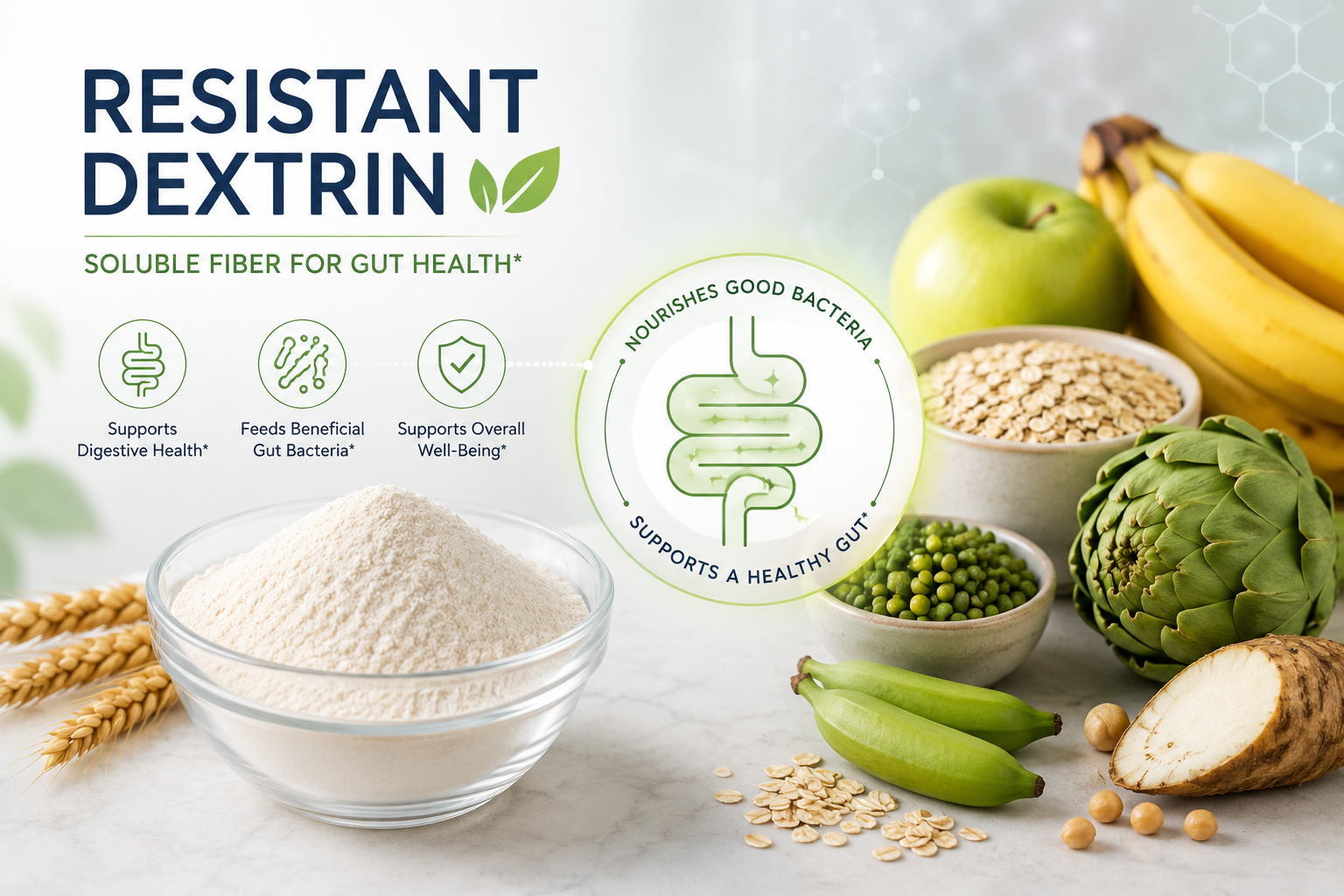
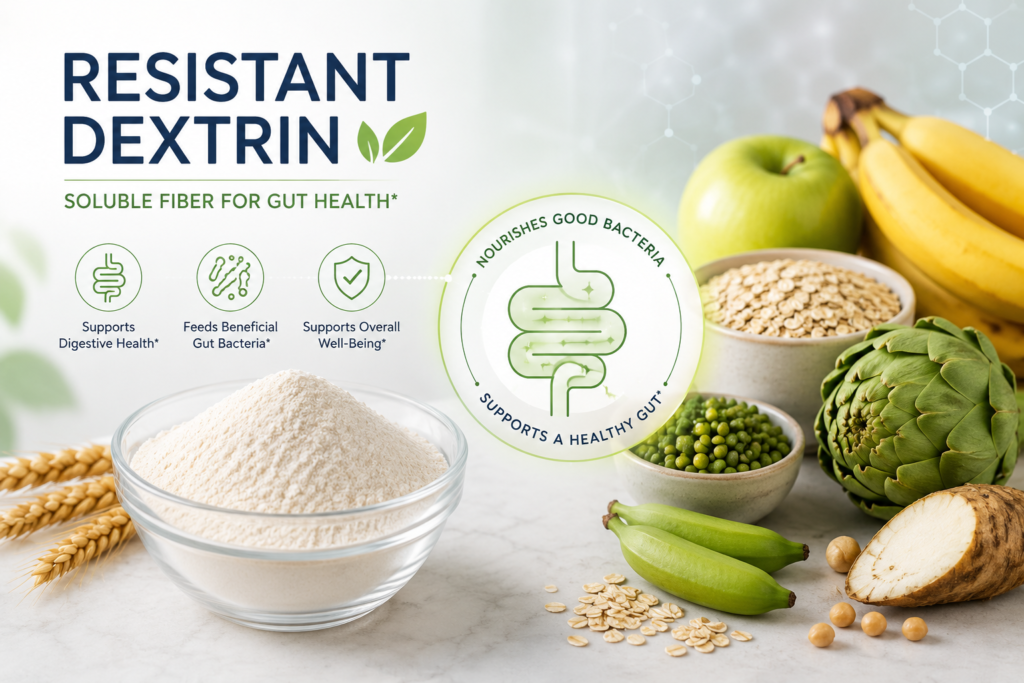
Resistant dextrin is a soluble dietary fiber that is good for gut health and digestion. It is made from starch through a controlled process. It resists digestion in the small intestine and reaches the colon, where beneficial bacteria ferment it. This process supports the gut microbiome and improves digestive function.
Resistant dextrin has a low glycemic index. It does not cause rapid blood sugar spikes. This makes it useful for low-sugar and diabetic-friendly products. It also has low calories, which supports weight management.
In food products, resistant dextrin increases fiber content without changing taste much. In supplements, it is used in powders and drinks for digestive support. Overall, resistant dextrin is considered safe and effective when used in normal amounts.
You now know that resistant dextrin supports digestion and helps control sugar impact. However, many questions still exist. What exactly is resistant dextrin? Is it a sugar? How does it compare with other ingredients? Are there side effects? These details are important before you decide to use it. The next sections explain each point in a clear way.
What Is Resistant Dextrin and How Is It Made?
Resistant dextrin is a type of soluble fiber. It comes from natural starch sources such as corn, wheat, or cassava. Manufacturers process the starch using heat and enzymes. This process changes the structure of the starch. As a result, the body cannot fully digest it.
The name “resistant” comes from its behavior in digestion. It resists breakdown in the small intestine. It then moves to the large intestine. There, gut bacteria ferment it. This fermentation produces beneficial compounds that support gut health.
Resistant dextrin is widely used in food and supplements. It has a neutral taste. It dissolves well in water. It also stays stable under heat and different pH levels. These properties make it easy to use in many products.
Resistant dextrin is a soluble fiber made from starch that resists digestion and supports gut health.
Production Process
| Step | Description |
|---|---|
| Heating | Breaks starch structure |
| Enzyme treatment | Changes molecular bonds |
| Drying | Forms powder product |
Key Properties
| Property | Benefit |
|---|---|
| Solubility | Easy to mix |
| Stability | Works in many foods |
| Neutral taste | Does not affect flavor |
*Supports digestive function
*Works as prebiotic fiber
Is Resistant Dextrin a Sugar or a Fiber?
Many people confuse resistant dextrin with sugar. This confusion comes from its origin. It comes from starch, which is a carbohydrate. However, its structure is different after processing.
Resistant dextrin does not break down into glucose quickly. It passes through the digestive system without full absorption. This makes it act like fiber, not sugar.
This difference is important for health. Sugar provides quick energy and raises blood glucose. Resistant dextrin does not behave this way. It helps control blood sugar levels instead.
Resistant dextrin is a dietary fiber, not a sugar, and it has minimal impact on blood glucose levels.
Comparison Table
| Feature | Resistant Dextrin | Sugar |
|---|---|---|
| Digestion | Slow | Fast |
| Calories | Low | High |
| Function | Fiber | Energy |
Resistant dextrin has a low glycemic index. It helps maintain stable blood sugar. This makes it useful for people who want better metabolic control.
*Helps reduce sugar intake
*Supports low-GI diets
How Does Resistant Dextrin Improve Gut Health?
Gut health depends on the balance of bacteria in the digestive system. Resistant dextrin supports this balance. It acts as food for beneficial bacteria.
When bacteria ferment resistant dextrin, they produce short-chain fatty acids. These compounds support gut health. They also help maintain the intestinal environment.
Regular intake of fiber supports digestion. Resistant dextrin is a convenient way to increase fiber intake. It works well in both food and supplements.
Resistant dextrin improves gut health by feeding beneficial bacteria and supporting digestion.
Gut Benefits
| Effect | Result |
|---|---|
| Fermentation | SCFA production |
| Microbiome | Better balance |
| Digestion | Improved function |
*Supports gut microbiome
*Improves digestion
Resistant Dextrin vs Maltodextrin: What Is the Difference?
Both ingredients come from starch. However, they have different functions. Maltodextrin is easy to digest. It provides quick energy. Resistant dextrin is not digested in the same way.
This difference affects how they are used. Maltodextrin is often used as a filler or energy source. Resistant dextrin is used as a fiber ingredient.
Understanding this difference helps in product formulation. It also helps consumers make better choices.
Resistant dextrin is a fiber with low glycemic impact, while maltodextrin is a digestible carbohydrate with high glycemic index.
Comparison Table
| Feature | Resistant Dextrin | Maltodextrin |
|---|---|---|
| Digestibility | Low | High |
| GI | Low | High |
| Function | Fiber | Energy |
*Better for fiber enrichment
*Lower blood sugar impact
What Are the Side Effects of Resistant Dextrin?
Resistant dextrin is safe for most people. It is widely used in food and supplements. However, like other fibers, it can cause mild discomfort if intake is high.
Some people may feel bloating or gas. This happens because of fermentation in the gut. The body needs time to adjust to higher fiber intake.
Resistant dextrin is generally safe but may cause mild bloating if consumed in large amounts.
Possible Effects
| Effect | Cause |
|---|---|
| Bloating | Fermentation |
| Gas | Increased fiber |
*Safe for regular use
*Well tolerated
How to Use Resistant Dextrin Powder in Food and Supplements?
Resistant dextrin powder is easy to use in many products. It dissolves quickly in water. It has no strong taste. This makes it suitable for beverages, bakery, and supplements.
Manufacturers use it to increase fiber content. It also helps improve product positioning as healthy or functional.
Resistant dextrin powder is used in foods and supplements to increase fiber and support health benefits.
Applications
| Product | Use |
|---|---|
| Beverages | Fiber drinks |
| Bakery | Fiber enrichment |
| Supplements | Powder blends |
Conclusion
Resistant dextrin is a useful ingredient for both health and product development. It supports gut health, improves digestion, and helps control blood sugar. It also has a low glycemic index and low calories.
It is not a sugar. It works as a soluble fiber. It fits well in many food and supplement products because it has good stability and neutral taste. Most people can use it safely when intake is moderate.
For both consumers and brands, resistant dextrin offers a simple way to improve nutrition. A careful choice of quality and application can lead to better results.
If you need high-quality resistant dextrin for your products, we can support you. We offer stable and high-purity resistant dextrin powder for food and supplements. Our products provide excellent solubility and consistent performance. Contact us today to request samples and improve your formulation results.