Fiber claims are driving product innovation across food, supplement, and nutrition markets. Buyers are under pressure to select ingredients that support digestive health, clean labeling, and regulatory compliance, while still delivering good taste and processing performance.
However, confusion often arises between two popular prebiotic fibers: FOS (Fructooligosaccharides) and Inulin. They are frequently grouped together, yet they differ in structure, functionality, and application behavior.
Understanding the real differences between FOS and inulin helps brands make precise formulation decisions and avoid costly positioning or performance mistakes.
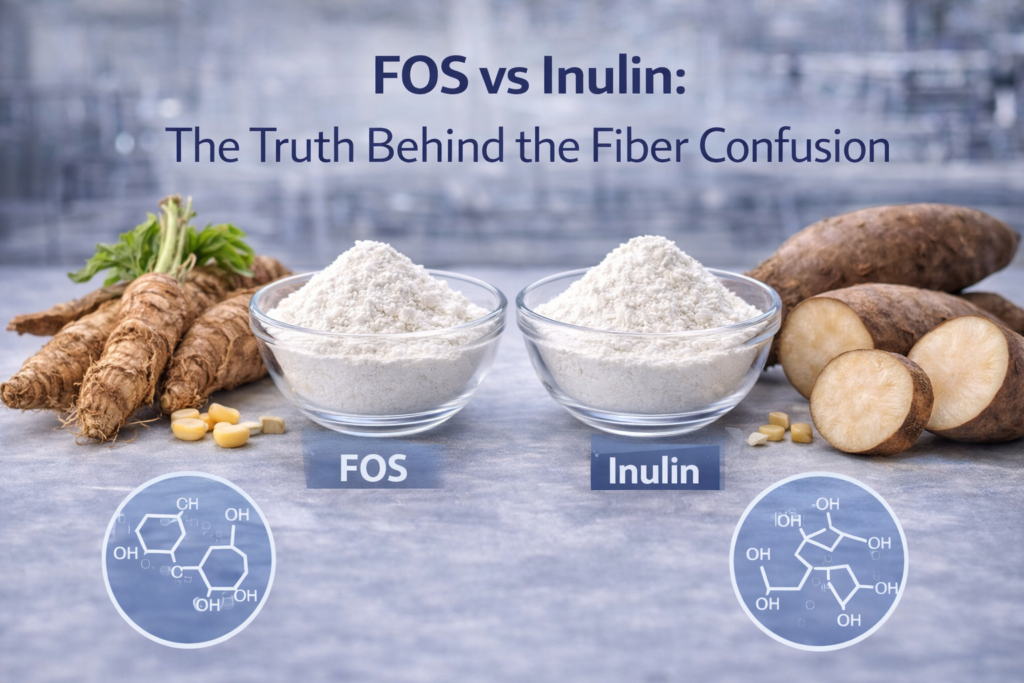
FOS and inulin are both prebiotic fibers derived from plant sources, but they differ in chain length, sweetness, and functional performance. FOS is shorter-chain, mildly sweet, and highly soluble, while inulin has longer chains, minimal sweetness, and stronger fiber functionality. Choosing the right one depends on product goals.
To choose the right fiber ingredient, buyers must compare FOS and inulin across structure, digestion, application performance, and labeling impact.
What Is FOS?
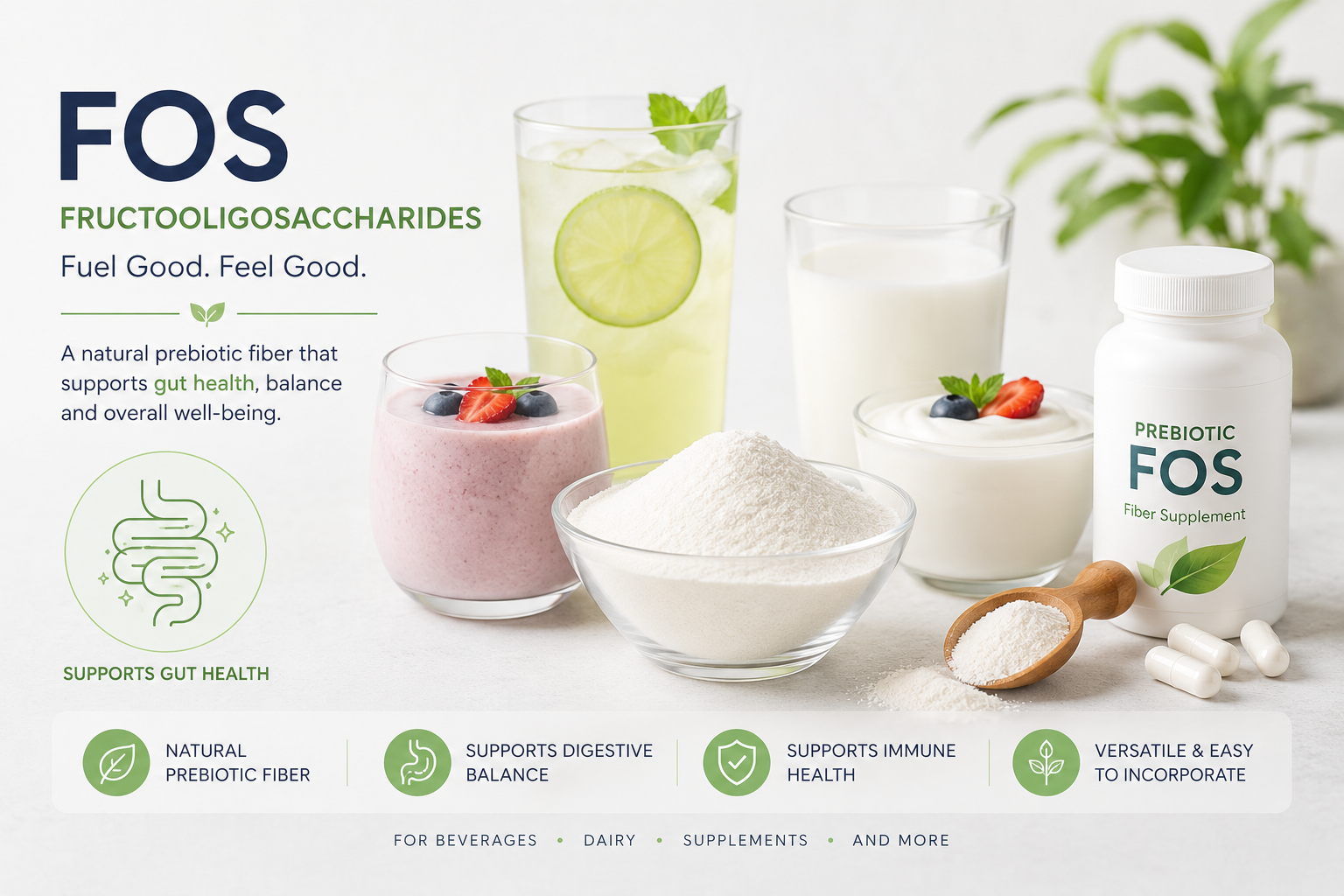
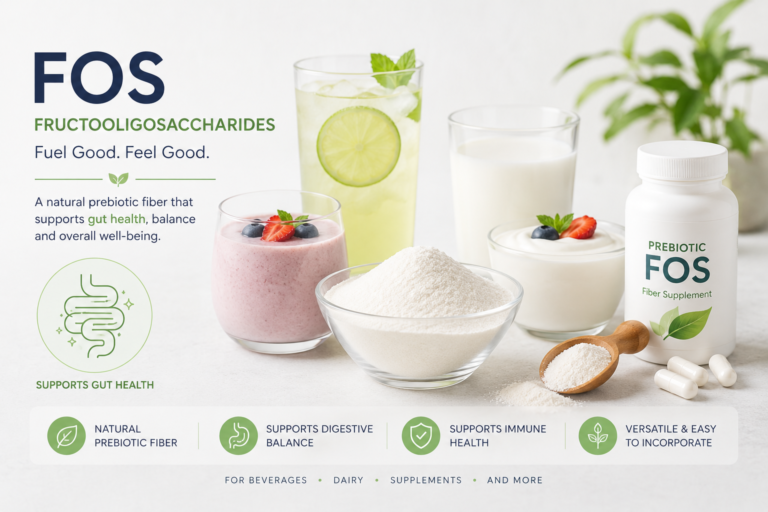
FOS, or fructooligosaccharides, is a short-chain carbohydrate made up of linked fructose molecules. It is naturally sourced from plants such as chicory root and sugar beet, or produced through controlled enzymatic conversion of sucrose, allowing consistent quality and scalable industrial supply for food and supplement applications.
Due to its short molecular chain, FOS is quickly fermented by beneficial gut bacteria and provides a gentle, naturally sweet taste. This combination makes it ideal for sugar-reduction formulations, as it enhances palatability while supporting prebiotic positioning in functional foods and dietary supplements.
For manufacturers, FOS offers a balance of nutritional value and processing versatility. Its high solubility, low viscosity, and clean flavor profile allow easy integration into beverages, powders, gummies, and chewables, supporting both product performance and consumer-friendly labeling.
FOS is a short-chain, mildly sweet prebiotic fiber.
- High solubility
- Low viscosity
- Fast fermentation
* FOS supports beneficial gut bacteria growth.
* Mild sweetness allows partial sugar replacement.
What Is Inulin?
Inulin is a long-chain fructan naturally occurring in plants such as chicory root, agave, and Jerusalem artichoke. Its extended molecular structure results in higher degrees of polymerization, which deliver stronger dietary fiber functionality and a slower, more gradual fermentation profile in the digestive system.
Compared with FOS, inulin provides little to no sweetness. Instead, it plays a functional role in improving body, texture, and mouthfeel, helping manufacturers enhance product structure without impacting flavor profiles or increasing sugar content.
As a result, inulin is widely used for fiber enrichment, fat replacement, and clean-label formulations. It allows brands to improve nutritional value, support digestive health positioning, and meet consumer demand for natural, plant-based ingredients without compromising product quality.
Inulin is a long-chain, neutral-tasting dietary fiber.
- Low sweetness
- Higher viscosity
- Sustained fermentation
* Inulin supports fiber enrichment claims.
* Longer chains improve texture and satiety.
How Do FOS and Inulin Differ Structurally?
The primary difference between FOS and inulin lies in chain length. FOS consists of short fructose chains, while inulin contains longer and more complex chains.
This structural difference directly affects digestion speed, sweetness, solubility, and functional behavior during processing.
For buyers, structure determines both nutritional impact and formulation outcomes.
Chain length defines performance differences.
| Factor | FOS | Inulin |
|---|---|---|
| Chain length | Short | Long |
| Sweetness | Mild | Minimal |
| Fermentation | Fast | Gradual |
* Short chains ferment faster.
* Longer chains enhance fiber functionality.
How Do They Perform in Food and Supplements?
FOS is highly effective in beverages, gummies, and chewable formats because of its excellent solubility and neutral, clean taste. It dissolves quickly in liquid systems, maintains product clarity, and does not introduce grittiness or unwanted viscosity, making it ideal for clear drinks and smooth-textured supplements.
In contrast, inulin performs best in bars, baked goods, dairy alternatives, and capsule formulations, where higher fiber loading and texture enhancement are key objectives. Its longer-chain structure contributes body, creaminess, and structural support, helping improve mouthfeel and overall product integrity.
Choosing the appropriate fiber is a strategic formulation decision. The right selection enhances processing stability, sensory quality, and functional performance, ultimately improving consumer acceptance while supporting clear nutritional and labeling claims.
Application suitability varies by fiber type.
- FOS: drinks, powders, gummies
- Inulin: bars, baked goods, capsules
* FOS favors liquid systems.
* Inulin enhances solid food texture.
Which Is Better for Digestive Health Claims?
Both FOS and inulin support digestive health, but their fermentation patterns differ. FOS is fermented quickly, promoting rapid bifidobacteria growth.
Inulin ferments more slowly, offering sustained gut health support and improved tolerance for some consumers.
Brands should align fiber choice with claim strategy and target audience.
Both fibers support gut health differently.
- FOS: fast prebiotic action
- Inulin: sustained digestive support
* Fermentation speed influences tolerance.
* Claim wording depends on fiber type.
Key Sourcing Considerations for FOS and Inulin Buyers
When sourcing FOS or inulin, buyers should look beyond basic specifications. Raw material origin, degree of polymerization (DP), purity, and processing method directly influence functional performance, digestive tolerance, and label claims across markets.
Supplier quality and specification control determine real-world performance.
Key evaluation points include source traceability, DP range consistency, microbiological standards, and regulatory readiness (GMP, HACCP, regional compliance). Suppliers that provide technical documentation, application guidance, and stable supply reduce formulation risk and support scalable production.
* Controlled DP ensures predictable digestion and functionality.
* Transparent suppliers reduce regulatory and launch risks.
Conclusion
FOS and inulin are both valuable prebiotic fibers, but they are not interchangeable. FOS offers sweetness and fast fermentation, while inulin delivers stronger fiber functionality and texture benefits. Understanding these differences allows brands to select the right ingredient for their product goals, market positioning, and processing needs.
For brands sourcing FOS or inulin ingredients, working with a GMP-certified manufacturer ensures consistent quality, clear specifications, and formulation support. Reliable supply partners help accelerate product development while maintaining regulatory and performance standards.