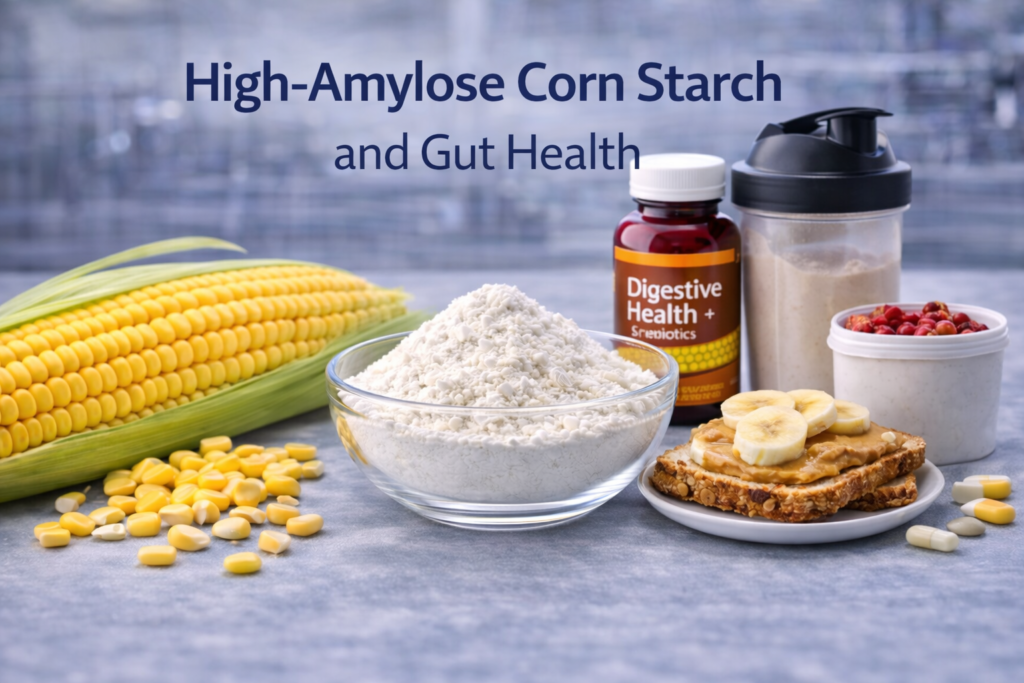
Gut health has become a core focus for food and nutrition brands worldwide. Buyers are under pressure to formulate products that support digestive wellness, fiber intake, and metabolic health, while still meeting processing and labeling requirements.
At the same time, consumers increasingly scrutinize carbohydrate sources, questioning digestibility, glycemic impact, and real health value. Traditional starches often fail to meet these expectations.
High-amylose corn starch offers a science-backed solution by combining functional performance with proven gut health benefits.
High-amylose corn starch supports gut health by acting as a resistant starch that resists digestion in the small intestine. It reaches the colon intact, where it promotes beneficial gut bacteria, supports short-chain fatty acid production, and contributes to improved digestive function.
To understand why high-amylose corn starch is increasingly used in gut health formulations, it is important to examine its structure, digestion behavior, and application advantages.
What Is High-Amylose Corn Starch?
High-amylose corn starch is a specialized starch containing a significantly higher proportion of amylose compared to conventional corn starch. This unique composition alters how the starch behaves during digestion and processing.
Unlike rapidly digestible starches, high-amylose corn starch resists enzymatic breakdown in the small intestine, allowing it to function as a resistant starch with added physiological benefits.
High-amylose corn starch is a resistant starch with unique digestive properties.
- Higher amylose content
- Lower digestibility
- Functional carbohydrate source
* Amylose-rich starches digest more slowly than standard starches.
* Resistance to digestion enables fiber-like behavior.
How Does High-Amylose Corn Starch Support Gut Health?
The key gut health advantage of high-amylose corn starch lies in its resistance to enzymatic digestion in the small intestine. Unlike rapidly digestible starches, it is not quickly broken down into glucose, which helps limit post-meal blood sugar spikes and allows the starch to move intact through the upper digestive tract.
Once it reaches the large intestine, high-amylose corn starch becomes a fermentable substrate for beneficial gut bacteria. This fermentation process helps support a balanced gut microbiome and contributes to normal digestive function, which is essential for long-term intestinal health.
By nourishing beneficial bacteria instead of converting into glucose, high-amylose corn starch functions more like dietary fiber than a traditional carbohydrate. This dual action supports gut health goals while aligning with reduced-glycemic and metabolic health positioning for functional food and nutrition products.
- Reaches the colon intact
- Fermented by gut microbiota
- Supports digestive balance
* Resistant starch promotes beneficial bacterial growth.
* Reduced glucose absorption supports metabolic health.
Why Is Resistant Starch Important for the Microbiome?
Resistant starch supports gut microbiome health by acting as a fermentable substrate for beneficial intestinal bacteria. During fermentation in the colon, these microbes produce short-chain fatty acids such as butyrate, which are widely recognized for their role in maintaining a healthy digestive environment.
Short-chain fatty acids, particularly butyrate, help nourish colon cells and strengthen the intestinal barrier. This supports normal gut permeability and contributes to improved digestive comfort, which is an important consideration for food, supplement, and medical nutrition formulations.
By selectively fueling beneficial microbial activity, resistant starch helps promote a balanced gut ecosystem. This targeted fermentation supports long-term digestive health while differentiating resistant starch from rapidly digestible carbohydrates in functional nutrition products.
- Encourages SCFA production
- Supports colon health
- Enhances gut barrier function
* Butyrate supports colon cell health.
* Microbiome balance influences digestive resilience.
Processing and Stability Advantages for Manufacturers
Beyond nutritional benefits, high-amylose corn starch offers strong processing stability. It maintains structure under high heat, pressure, and shear conditions common in modern food manufacturing.
This stability ensures consistent texture, viscosity, and performance across production batches.
Processing stability supports reliable manufacturing.
- Heat and shear resistance
- Consistent viscosity
- Low breakdown during extrusion
* Stable starches reduce batch variability.
* Predictable behavior improves production efficiency.
Food and Supplement Applications
Food manufacturers widely apply high-amylose corn starch in baked goods, snacks, cereals, nutrition bars, and functional foods designed for digestive health positioning. Its stable structure allows it to withstand common processing conditions such as baking and extrusion while contributing functional fiber content.
Because high-amylose corn starch has a neutral taste and minimal impact on sensory properties, it enables fiber enrichment without changing flavor profiles. At the same time, its resistant starch content supports low-GI positioning and gut health–related claims in finished products.
This combination of processing stability, nutritional functionality, and sensory neutrality makes high-amylose corn starch versatile across both mainstream food categories and specialized functional nutrition products.
- Bakery and snacks
- Breakfast cereals
- Digestive health foods
* Neutral taste preserves product profiles.
* Fiber positioning supports health-focused branding.
Key Sourcing Considerations for Buyers
For B2B buyers, sourcing high-amylose corn starch requires attention to amylose content, resistant starch levels, and regulatory documentation.
Reliable suppliers provide consistent specifications, GMP compliance, and application guidance for different product formats.
Quality sourcing protects performance and compliance.
| Buyer Focus Area | Importance |
|---|---|
| Amylose percentage | High |
| Resistant starch level | High |
| GMP certification | Critical |
* Specification consistency ensures digestive efficacy.
* Supplier transparency reduces regulatory risk.
Conclusion
High-amylose corn starch bridges the gap between functional nutrition and manufacturing performance. Its resistant starch properties support gut health, while its stability and neutral taste make it suitable for a wide range of applications. For brands targeting digestive wellness and clean-label positioning, it represents a practical, science-backed ingredient choice.
For brands developing gut health–focused foods or supplements, partnering with a GMP-certified high-amylose corn starch supplier ensures reliable quality, clear specifications, and formulation support. A strong supply partner helps accelerate product development while meeting regulatory and performance expectations.