Many people see the words resistant dextrin and maltodextrin on labels. Many people think they are the same. Both come from starch. Both look like white powder. This creates confusion. Some people choose the wrong ingredient. Some brands use the wrong one in products.
This problem matters in real use. Maltodextrin can raise blood sugar fast. Resistant dextrin does not act the same way. If a person wants low sugar or better digestion, this difference is important. If a brand wants a healthy product, the choice affects the final result.
This article solves the confusion. It explains the key differences in a clear way. It shows how each ingredient works. It also helps you choose the right one for your needs.
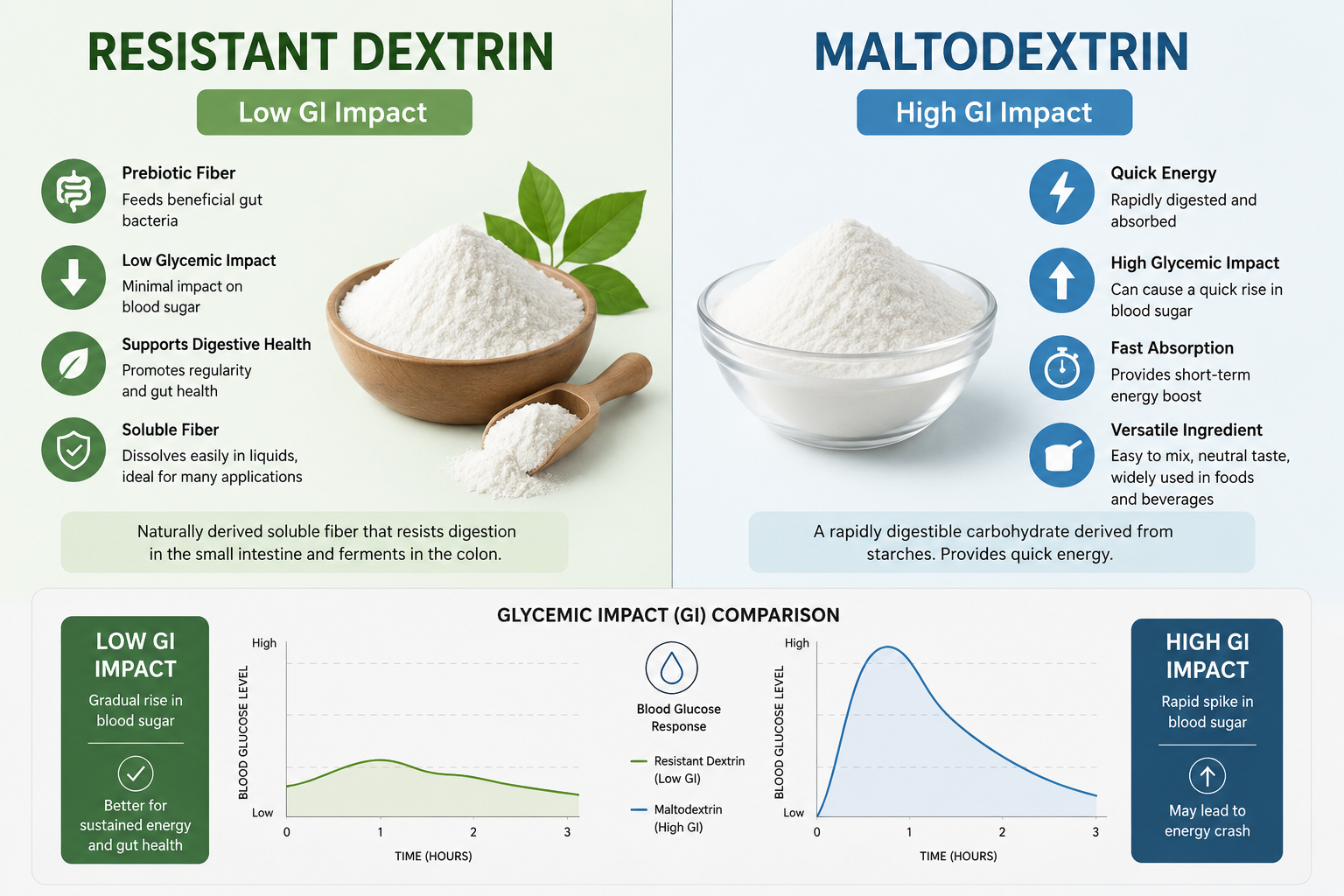
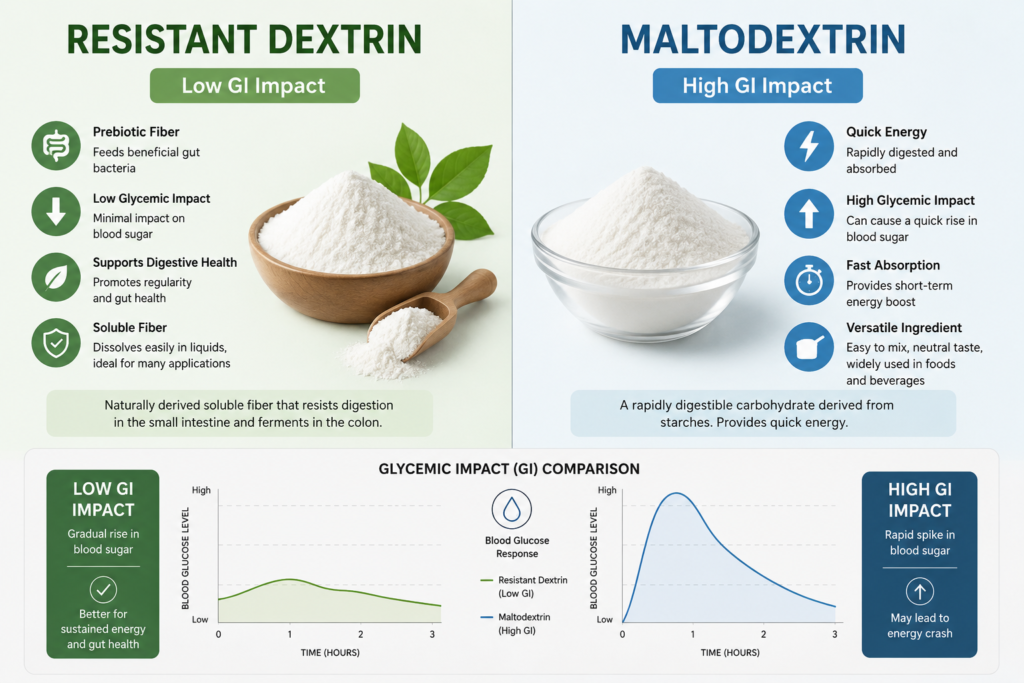
Resistant dextrin and maltodextrin are both derived from starch, but they serve very different functions in the body and in food products. Resistant dextrin is a soluble dietary fiber that resists digestion in the small intestine. It passes to the colon, where it is fermented by beneficial bacteria. Because of this, it has a low glycemic index and does not cause rapid spikes in blood sugar.
This problem matters in real use. Maltodextrin can raise blood sugar fast. Resistant dextrin does not act the same way. If a person wants low sugar or better digestion, this difference is important. If a brand wants a healthy product, the choice affects the final result.
Resistant dextrin and maltodextrin are both derived from starch, but they serve very different functions in the body and in food products. Resistant dextrin is a soluble dietary fiber that resists digestion in the small intestine. It passes to the colon, where it is fermented by beneficial bacteria. Because of this, it has a low glycemic index and does not cause rapid spikes in blood sugar.
Maltodextrin, in contrast, is a rapidly digestible carbohydrate. The body breaks it down quickly into glucose. This leads to a high glycemic index and a fast increase in blood sugar levels. Maltodextrin is often used as a quick energy source in sports drinks and processed foods.
The key difference lies in digestion and metabolic response. Resistant dextrin supports gut health and stable blood sugar. Maltodextrin provides quick energy but may lead to blood sugar spikes. This makes resistant dextrin suitable for fiber enrichment and low-GI products, while maltodextrin is more suitable for energy-focused applications.
You now understand the basic difference between resistant dextrin and maltodextrin. However, this is only the start. Many details still matter. How are they produced? Why do they behave so differently? How do they affect health and product design? These questions help you make a better decision. The next sections explain each point in a clear and simple way.
Resistant dextrin vs maltodextrin: What are they made from?
Both resistant dextrin and maltodextrin come from starch. Manufacturers use sources like corn, wheat, or cassava. However, the processing methods are not the same. This creates different structures.
Resistant dextrin goes through heat and enzyme treatment. This changes the molecular bonds. The new structure becomes resistant to digestion. Maltodextrin goes through partial hydrolysis. This process breaks starch into smaller chains that are easy to digest.
The structure defines the function. Resistant dextrin acts like fiber. Maltodextrin acts like a simple carbohydrate. This difference starts at the production stage and continues into the body.
Resistant dextrin is processed to resist digestion, while maltodextrin is processed to be easily digested.
Production Comparison
| Factor | Resistant Dextrin | Maltodextrin |
|---|---|---|
| Process | Heat + enzyme | Hydrolysis |
| Structure | Complex | Simple |
| Digestibility | Low | High |
Functional Impact
- Resistant dextrin resists enzymes
- Maltodextrin breaks down fast
*Clear structural difference
*Different digestion behavior
Why do resistant dextrin and maltodextrin behave differently?
The behavior depends on structure. Resistant dextrin has complex bonds. Maltodextrin has simpler chains. This changes how enzymes act.
Enzymes in the small intestine break down simple carbohydrates. Maltodextrin fits this process. Resistant dextrin does not. It moves to the large intestine instead.
Resistant dextrin resists digestion due to its structure, while maltodextrin is easily broken down by enzymes.
Digestion Path
| Stage | Resistant Dextrin | Maltodextrin |
|---|---|---|
| Small intestine | Not digested | Fully digested |
| Large intestine | Fermented | Not reached |
*Different enzyme response
*Different metabolic path
How do they affect blood sugar levels?
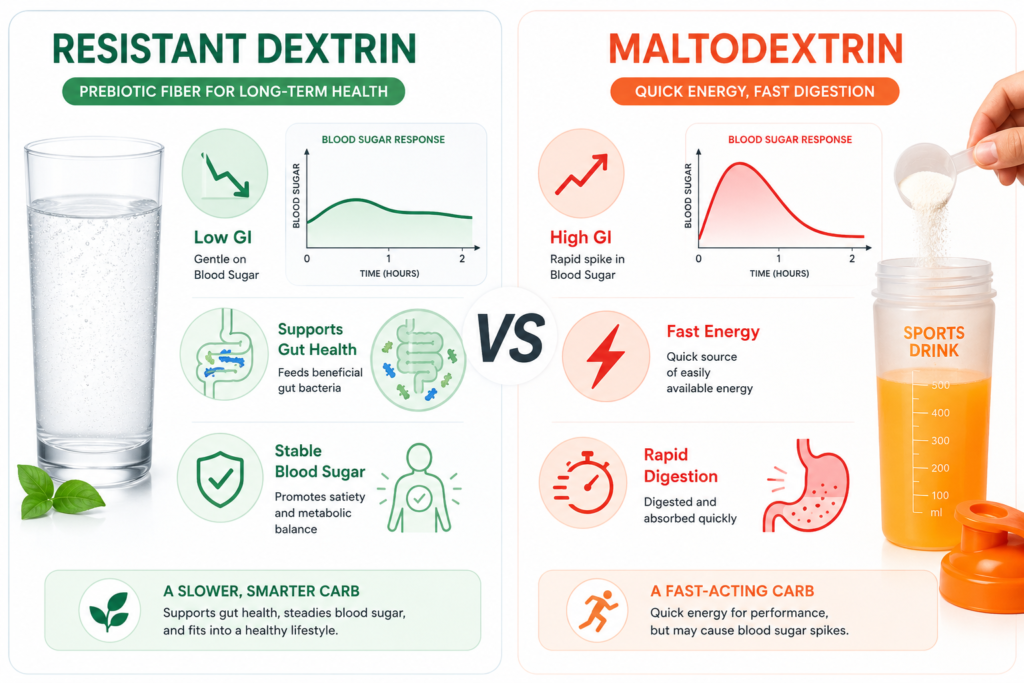
Blood sugar response is a key factor. Resistant dextrin has little effect. Maltodextrin causes a fast rise.
Resistant dextrin supports stable blood sugar, while maltodextrin causes rapid spikes.
GI Comparison
| Ingredient | Glycemic Index |
|---|---|
| Resistant Dextrin | Low |
| Maltodextrin | High |
*Low vs high GI
*Stable vs rapid glucose
Resistant dextrin vs maltodextrin: Which is better for health?
Health goals define the choice. Resistant dextrin supports gut health. Maltodextrin supports quick energy.
Resistant dextrin is better for digestion and blood sugar control, while maltodextrin is better for fast energy.
Health Impact
| Benefit | Resistant Dextrin | Maltodextrin |
|---|---|---|
| Gut health | Yes | No |
| Energy | Slow | Fast |
*Supports microbiome
*Provides energy
How are they used in food products?
Food companies use both ingredients in different ways. Resistant dextrin is used for fiber. Maltodextrin is used for texture and energy.
Resistant dextrin adds fiber, while maltodextrin improves texture and energy supply.
Applications
| Product | Resistant Dextrin | Maltodextrin |
|---|---|---|
| Beverages | Fiber drinks | Energy drinks |
| Snacks | Fiber enrichment | Texture |
*Functional ingredient use
*Wide application range
Which one should you choose for your application?
The choice depends on your goal. If you want fiber and low GI, resistant dextrin is better. If you need quick energy or bulking, maltodextrin fits better.
Choose resistant dextrin for health-focused products and maltodextrin for energy-focused products.
Decision Guide
| Goal | Best Choice |
|---|---|
| Low GI | Resistant Dextrin |
| Energy boost | Maltodextrin |
Conclusion
Resistant dextrin and maltodextrin look similar, but they act in very different ways. Resistant dextrin is a soluble fiber. It resists digestion and supports gut health. It also has a low glycemic index, so it helps keep blood sugar stable. Maltodextrin is a fast-digesting carbohydrate. It raises blood sugar quickly and provides rapid energy.
This difference affects both health and product use. Resistant dextrin works well in fiber-rich and low-GI products. Maltodextrin works well in energy drinks and processed foods. The right choice depends on your goal.
Understanding these differences helps you make better decisions in nutrition and product development.